The program focuses on building mentorship skills to enhance the quality of care in PEN-Plus clinics.
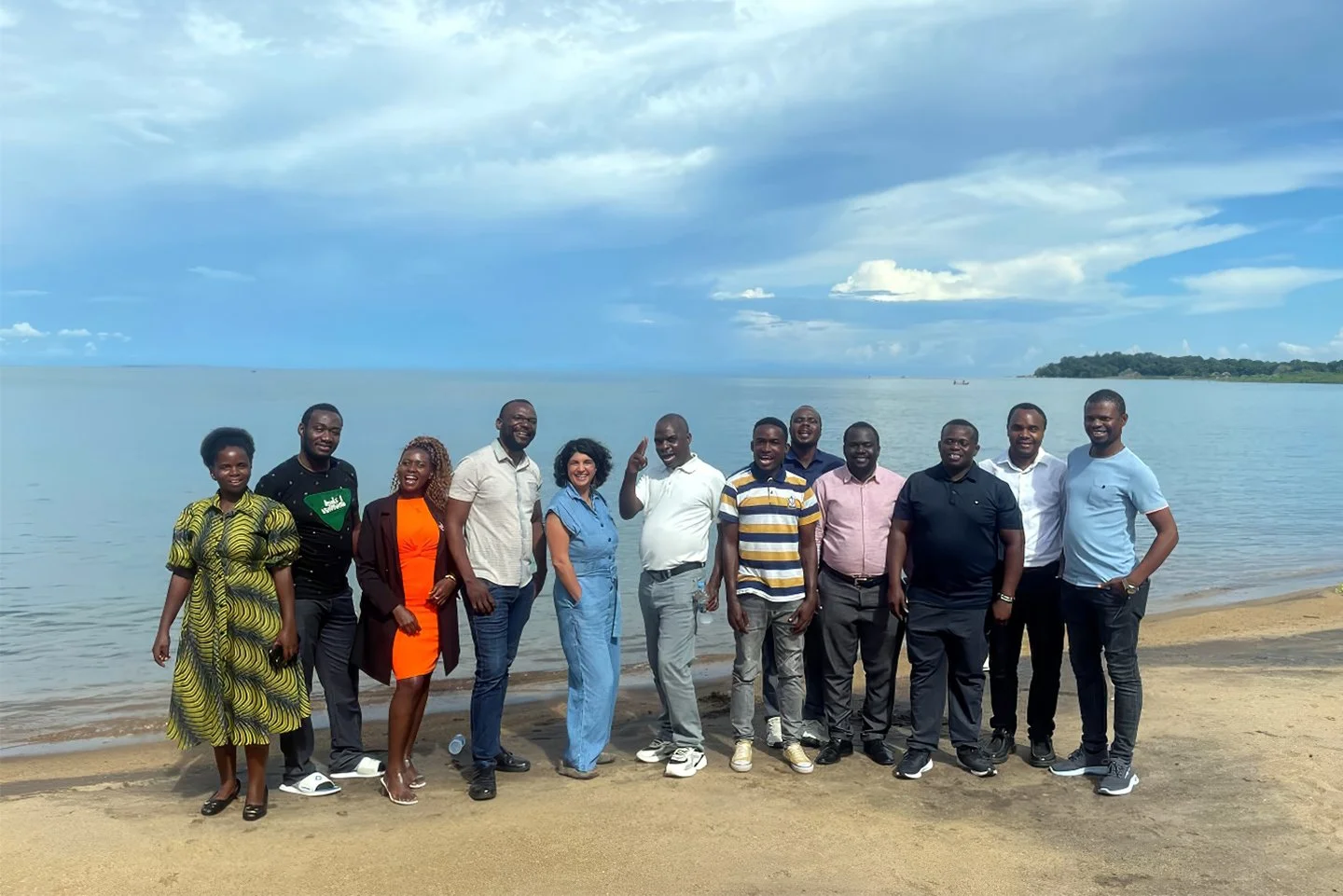
Malawi health care providers gather on the shore of Lake Malawi for a light moment during a weeklong master trainer course in early February. Leading the session, which focused on mentorship and teaching skills, were Medson Boti, PEN-Plus clinical officer for Partners In Health Malawi (fourth from left); Dr. Marta Patiño Rodriguez, associate director of education and training for the NCDI Poverty Network (fifth from left); Dr. Brown Khongo, NCD and mental health director for Partners In Health Malawi (third from right); and Gedeon Ngoga, clinical advisor for the Network (second from right). (Photo: Courtesy of Partners In Health Malawi)
A recent training session for health care providers in Malawi showed that skills such as mentoring, proficiency in giving effective feedback, and being able to assess patient experiences accurately can be as vital to quality care as medical equipment and resources.
Dr. Marta Patiño Rodriguez, associate director of education and training for the NCDI Poverty Network, said the weeklong session—held at Salima District Hospital in early February—focused on using effective mentorship as a tool for improving care for severe, chronic noncommunicable diseases, such as type 1 diabetes, sickle cell disease, and childhood heart disease.
“With our master training program, we are trying to promote the idea that strong mentorship is necessary for achieving a high level of quality of care,” she said.
Eight care providers from PEN-Plus clinics in Malawi attended the session. Facilitators included Dr. Patiño Rodriguez; Gedeon Ngoga, clinical advisor for the Network; Dr. Brown Khongo, NCD and mental health director for Partners In Health Malawi; and Medson Boti, PEN-Plus clinical officer for Partners In Health Malawi.
“The care providers learned how to provide effective mentorship,” Dr. Patiño Rodriguez said. “How to give feedback, how to identify gaps, how to prioritize gaps you find, how to use tools to objectively assess providers’ level of competency.”
Supporting training for local health facilities is a key pillar of PEN-Plus, a model for providing treatment to people—especially children and young adults—living with severe, chronic noncommunicable diseases in low- and lower-middle-income countries.
Malawi was one of Africa’s first adopters of PEN-Plus. Partners In Health and the Malawi Ministry of Health established the country’s first PEN-Plus clinic in 2018 in Neno District, a rural region in Malawi’s southwest, along the border with Mozambique. That year was pivotal; 2018 also saw the launch of Malawi’s NCDI Poverty Commission Report at an event in the capital, Lilongwe.
The country has scaled up PEN-Plus since its Neno origins, with full-fledged clinics in nine district hospitals throughout the country, along with less-developed PEN-Plus facilities in a handful of others. Salima District Hospital is in the country’s center, east of Lilongwe and near the shores of Lake Malawi.
Care providers from Salima are familiar with PEN-Plus trainings. In January 2023, clinical officers and nurses from Salima and Karonga completed two weeks of echocardiography training at the PEN-Plus facilities in Neno.
Dr. Patiño Rodriguez said the recent training included interactive lessons such as case-based presentations and models for providing mentorship during patient care. The next step for providers, she said, will be to apply those experiences in their clinical work back home.
It was clear, Ngoga added, that when care providers returned to their clinics, they’d be bringing a new set of skills.
“The participants reported that the training was an eye-opener,” Ngoga said. “The intensive course was a great starting point for their roles as master trainers.”