Pujehun PEN-Plus Clinic Offers a Lifeline in Sierra Leone
The facility sees more than 2,000 patients in active care, sometimes from as far away as Freetown.
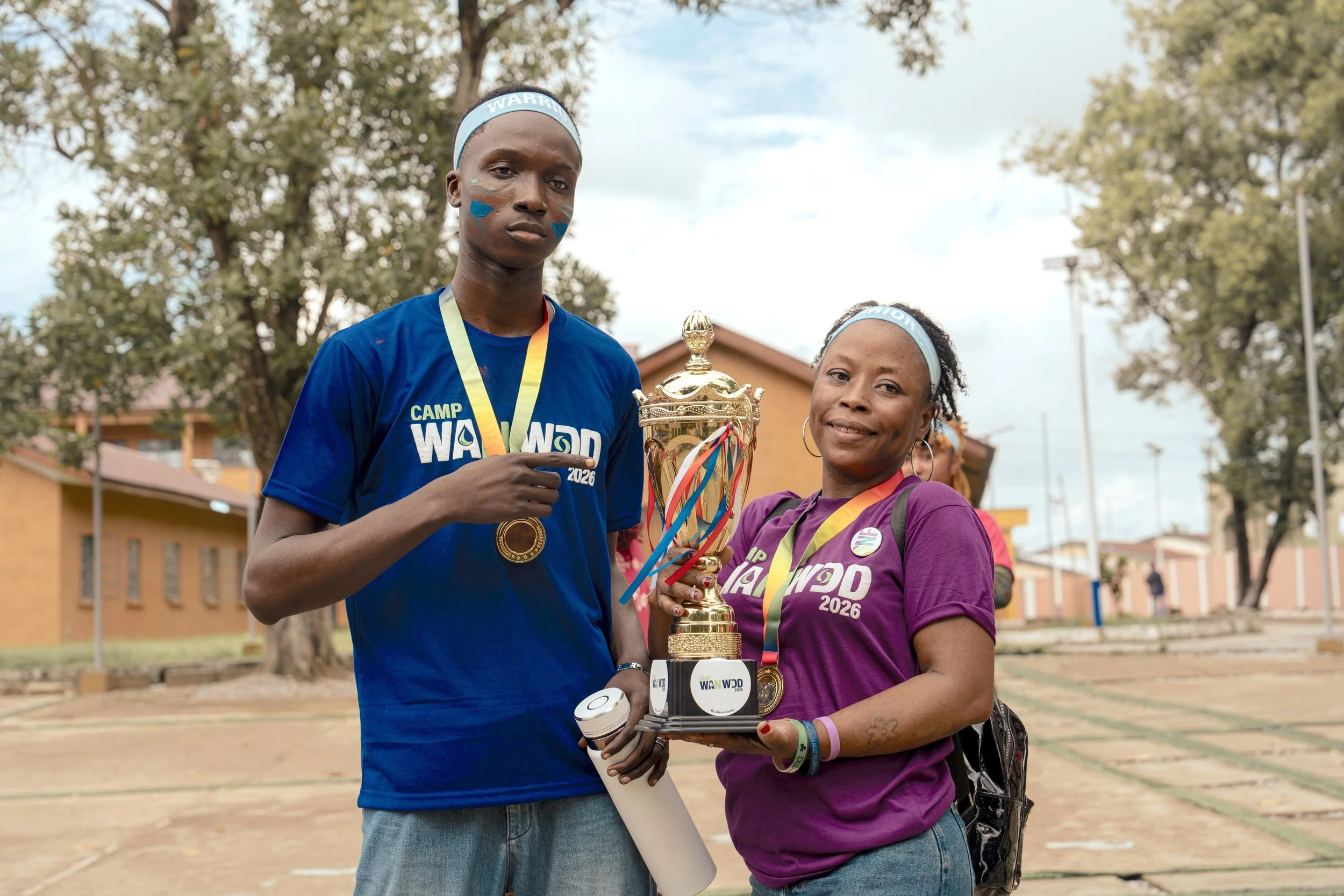
Camper Mohamed Tejan and camp counselor Sylvia Koroma display the trophy and medals their team won during lighthearted competitions at Camp Wanwɔd, recently held in Bo, Sierra Leone. Tejan lives in Freetown, Sierra Leone’s capital, yet travels to a PEN-Plus clinic nearly 200 miles away for medicine to treat his sickle cell disease. Koroma receives care at the same clinic for type 1 diabetes. (Photo: Federico Bruckner)
Every few months, Mohamed Tejan travels nearly 200 miles from Freetown, Sierra Leone’s capital, to a PEN-Plus clinic in the country’s south.
The trip takes nearly five hours by car and costs about 500 leones, or US$20, roundtrip. Tejan, 19, said he used to make the trip with his mother, but lately he’s been going alone because of the cost. He lives with sickle cell disease and receives care at the clinic, along with free medicine that is not available to him in Freetown, free or otherwise.
Bintu Dukulay, 23, also receives care and medicine for sickle cell disease at the Pujehun clinic. She lives about 90 minutes from the clinic, in the city of Bo, where she’s studying business administration at the Bo campus of Njala University.
Dukulay and Tejan—who also hopes to attend a university, possibly to study law—were two of more than 60 young people who attended Camp Wanwɔd, an integrated PEN-Plus camp, in early August.
The camp was held at a boarding school in Bo, which is the second-largest city in Sierra Leone and part of Bo District. The district borders Pujehun District to the north. Bo and Pujehun districts are part of Sierra Leone’s Southern Province, which sees thick humidity and heavy rains in August, during rainy season. Rice fields stretch to the horizon in lush agricultural areas surrounding Bo. Harvests from the fields are sold in the city, where busy markets and shops line the streets.
The Bo School is in the city’s center on a historic, enclosed campus, which provided ample space for Camp Wanwɔd.
The NCDI Poverty Network facilitated the camp in partnership with Doctors with Africa CUAMM, an international nongovernmental organization committed to health promotion; Sonia Nabeta Foundation, an experienced convener of camps for young people living with type 1 diabetes; and Partners In Health–Sierra Leone, which supports 11 health facilities in eight districts across the country.
CUAMM operates the Pujehun PEN-Plus clinic, while Partners In Health operates the country’s other PEN-Plus clinic, at Koidu Government Hospital in Kono District. The clinics each sent about 30 young patients with either type 1 diabetes or sickle cell disease to the camp. Both clinics also sent staff, including doctors, nurses, social workers, and community health officers.
Integrating care for severe, chronic noncommunicable diseases—providing diagnosis and treatment services for different conditions under one roof—is the foundation of the PEN-Plus model of care.
As PEN-Plus camps reflect that model, looking at the PEN-Plus clinic in Pujehun can provide a backdrop for the setting of Camp Wanwɔd.
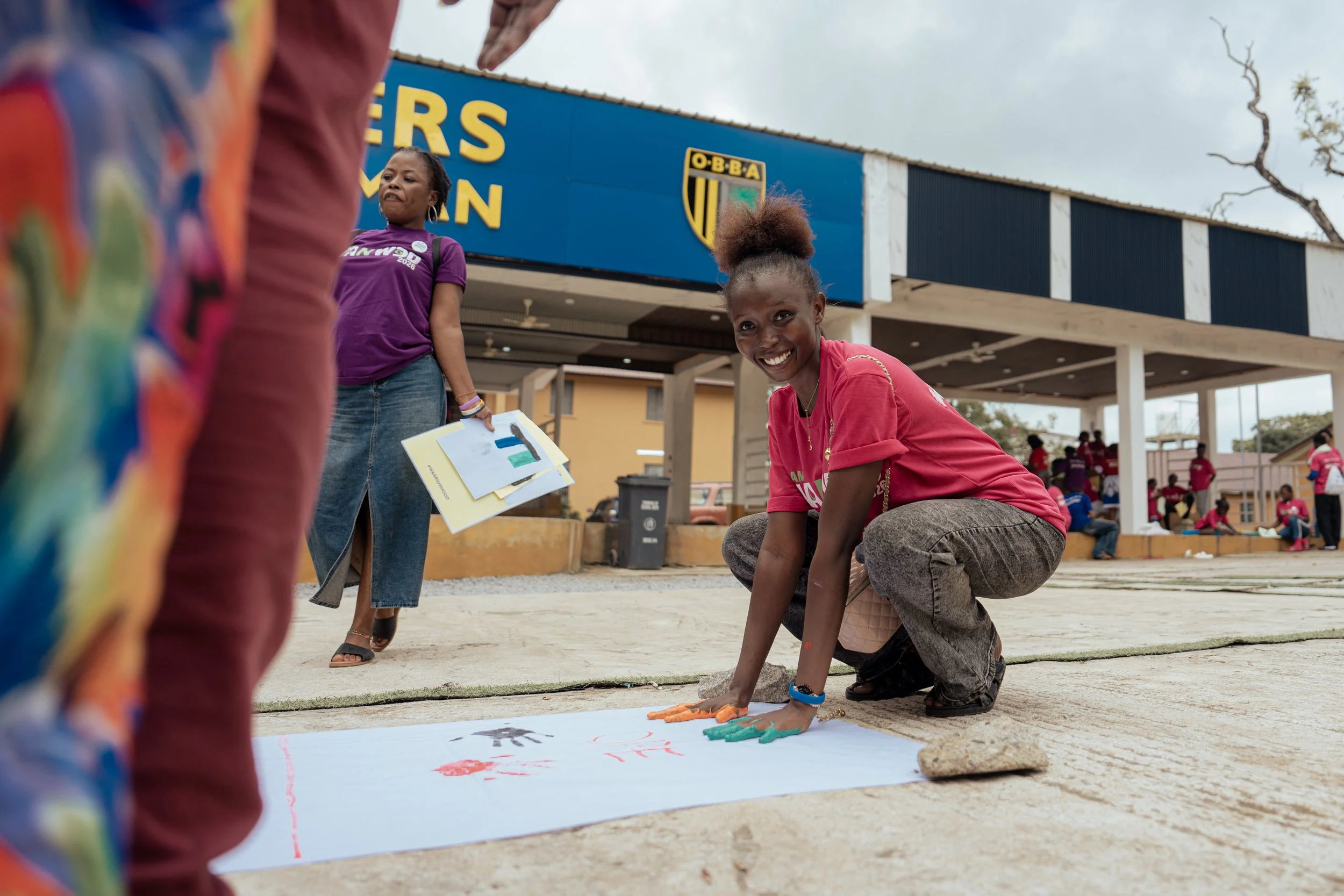
Bintu Dukulay, 23, adds her handprints to the camp flag for Camp Wanwɔd in Bo, Sierra Leone. Dukulay receives care and medicine for sickle cell disease at the PEN-Plus clinic in Pujehun District. She lives about 90 minutes from the clinic, in the city of Bo, where she’s pursuing a degree in business administration. (Photo: Federico Bruckner)
A Busy Clinic
Dr. Sara Perelli, CUAMM’s lead clinician at the Pujehun clinic, said the clinic has more than 2,000 patients in active care. People with hypertension form the clinic’s largest patient group, yet clinicians also treat about 400 people living with sickle cell disease, about 300 with epilepsy, and about 50 with type 1 diabetes.
Clinic staff conduct extensive community outreach to find people who may be living with an undiagnosed noncommunicable disease and connect them to care, Dr. Perelli said. The staff also work to keep current patients active in their care.
Much of the clinic’s community outreach is conducted by community health officers, including Abubakarr Sannoh and Brima Sesay. Both attended Camp Wanwɔd to mentor and lead young warriors, whom they ordinarily see only in clinical settings or medical home visits. The clinic also supported Camp Wanwɔd with several clinical members from Pujehun, including Massah Swaray, the lead camp nurse, and Mabel Bockarie, a social worker who visits patients in the community and helps keep them active with their treatment.
“They are very caring, and they take good care of us,” Dukulay said of the staff at the Pujehun PEN-Plus clinic.
Dr. Perelli said the community health officers host awareness events in local schools and markets, in addition to informational campaigns through local media outlets, such as radio. The outreach efforts detail the causes and symptoms of noncommunicable diseases, address common misconceptions that can lead to stigma, and emphasize the importance of keeping current with medications, visiting the clinic when sick, and continuing care long-term.
Dr. Perelli said the clinic’s outreach also includes social support—particularly financial assistance for transportation costs, to enable patients to continue attending the clinic.
That’s crucial for Dukulay.
“Sometimes, I don’t have money for transport, to get medicine,” she said. “The struggle is too much.”
Dr. Perelli said costs, a lack of awareness, and other barriers to care are likely preventing some people’s ability to access the clinic.
“For sure there are more patients to be found,” she said, “because sickle cell disease is so common in Sierra Leone.”
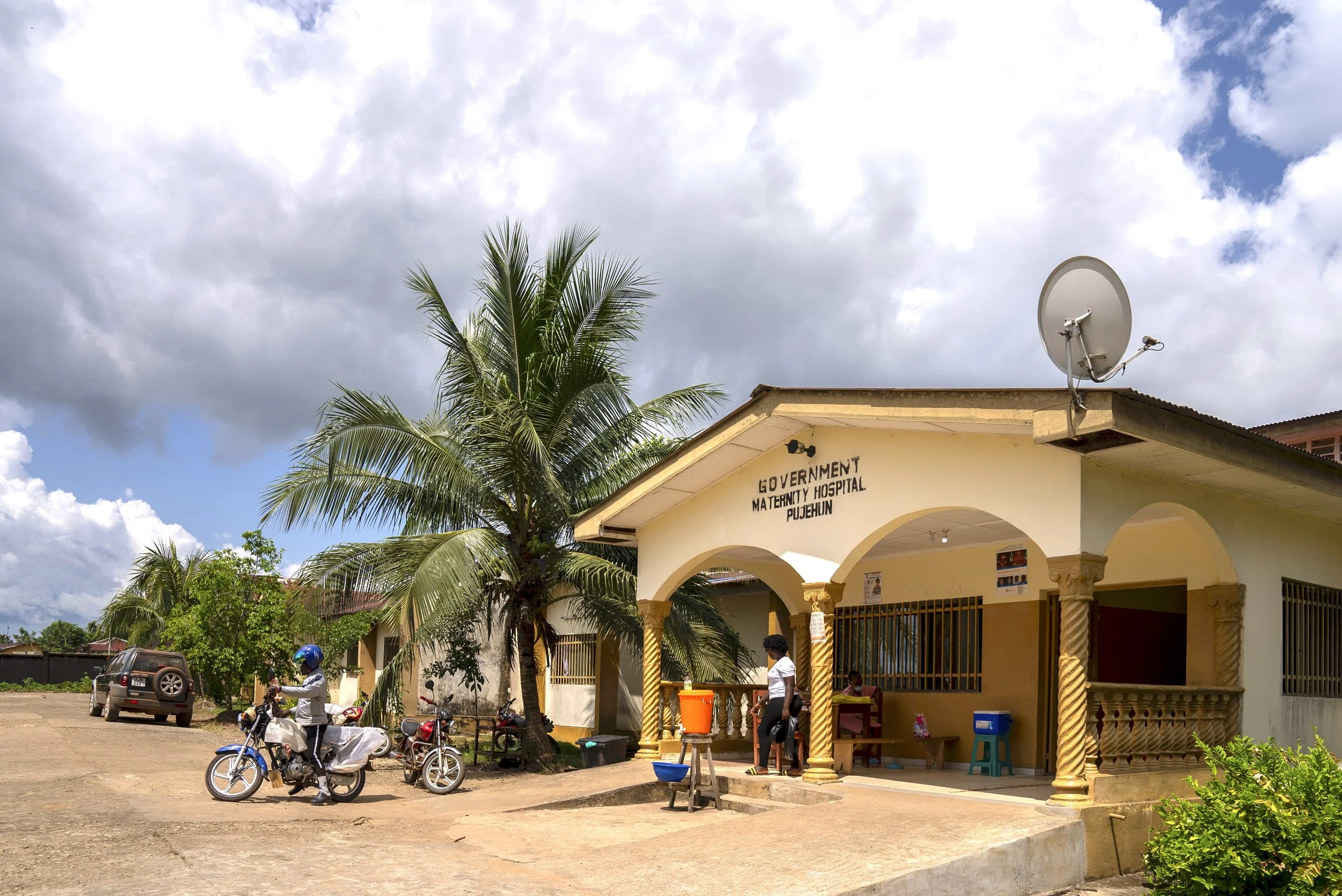
The PEN-Plus clinic at Pujehun Government Hospital is housed within this complex. (Photo: Nicola Berti/CUAMM)
Unity for Warriors
For young people at Camp Wanwɔd, the week in early August was an opportunity to find not just each other, but also the solace and restored confidence that can come from realizing you are not alone.
The camp participants refer to themselves and each other as “warriors,” because of the physical, mental, and social challenges they face every day. The camp provided a week of health education, empowerment, and peer support. The nonclinical setting enabled warriors with different conditions to learn from each other, share experiences, and find common ground.
“The word ‘Wanwɔd’ is a Krio word, meaning united,” said Helen Finda Ganda, coordinator of Camp Wanwɔd, an assistant project manager for CUAMM, and a Bo native. “Because we have type 1 diabetes warriors and sickle cell disease warriors, Wanwɔd is about bringing them together and creating unity, so they see themselves as one.”
Finda Ganda said her favorite part of the week was seeing warriors arrive.
“I’ve worked with PEN-Plus for over three years in Pujehun, so I’ve seen some of these kids in the clinic,” she said. “You know, conditions like type 1 diabetes and sickle cell are difficult for patients to manage. So, seeing the warriors happy—and witnessing their improvement—makes me really happy.”