The University of Rwanda is preparing to launch a nursing master’s degree in noncommunicable disease management, while Kampala International University is exploring a cardiology training program.
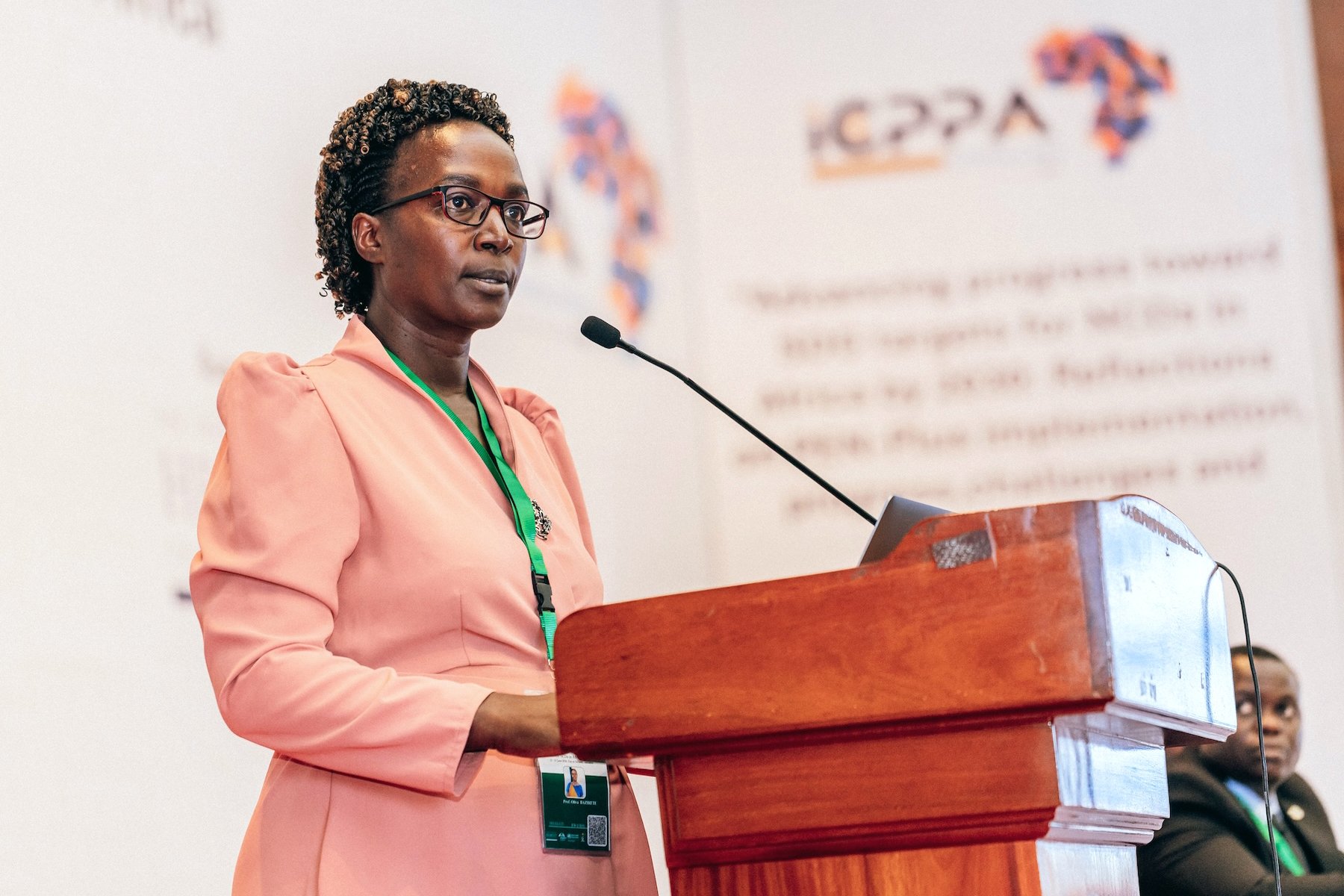
During the Third International Conference on PEN-Plus in Africa, Dr. Oliva Bazirete, dean of the University of Rwanda’s School of Nursing and Midwifery, previewed a soon-to-be-launched master’s program in nursing and noncommunicable disease management. (Photo: Courtesy of the World Health Organization)
Advanced training is a pillar of PEN-Plus, a proven model of integrated care for people living with severe, chronic noncommunicable diseases (NCDs). Now universities in sub-Saharan Africa are building that training into higher education, developing degree and certificate programs for the health workers who provide NCD care.
The University of Rwanda is furthest along. Its School of Nursing and Midwifery is finalizing approvals, accreditation, and the first cohort for a new postgraduate program in NCD management, which could launch in the coming weeks. In Uganda, Kampala International University is assessing its capacity to train providers in cardiology.
As countries develop national operational plans for implementing PEN-Plus and scaling up integrated NCD care, demand for trained nurses and other providers will grow.
“The goal is to improve patient outcomes through a more competent and stable workforce,” said Dr. Oliva Bazirete, dean of the University of Rwanda’s School of Nursing and Midwifery.
The Rwanda program will have two stages. Students will earn a certificate after the first year and a master’s degree in nursing and NCD management after the second. Applicants must work in NCD clinics or service areas, Dr. Bazirete said, so they can apply what they learn directly.
“The program has been carefully designed to equip nurses with advanced knowledge and skills to provide comprehensive NCD care within primary healthcare settings,” she said.
The first six months will cover five core modules: Foundations of Primary Health Care, Advanced Research Methods, Advanced Health Assessment, Advanced Pharmacology and Therapeutics, and Advanced Non-Communicable Disease Management. Together, Dr. Bazirete said, the modules “are intended to prepare nurses to take on enhanced clinical and leadership roles in NCD management, particularly within decentralized healthcare settings.”
A team from Rwanda’s Higher Education Council visited the university to assess whether the program meets national quality standards. The launch date and the first cohort of 10 students will be confirmed once the program is formally accredited.
The program is already drawing international attention. Dr. Bazirete presented it at the Third International Conference on PEN-Plus in Africa, held in June in Dar es Salaam, Tanzania. The conference drew more than 1,000 delegates, along with cabinet-level ministers from eight sub-Saharan African countries.
In Uganda, Kampala International University hosted a delegation from the Uganda Heart Institute in August. The delegation assessed the capacity for cardiology training and cardiovascular services at the university’s teaching hospital.
PEN-Plus was central to the discussions. In an article about the visit, the university noted that the model “strengthens the capacity of first-referral facilities to manage severe NCDs by training and mentoring mid-level healthcare providers.” The article added that PEN-Plus treats education as far more than short-term workshops, emphasizing practical training, hands-on experience, and ongoing mentorship.
Dr. Frank Mugabe Rwabinumi, principal medical officer at the Uganda Ministry of Health, noted that Uganda’s PEN-Plus program has been piloted in two hospitals and is poised for scale-up. That expansion, the university’s article said, shows “the importance of including teaching institutions in the national strategy.”
Dr. Gene Bukhman, co-chair of the NCDI Poverty Network and executive director of the Center for Integration Science in Global Health Equity, said higher education programs focused on severe NCDs will be essential as PEN-Plus expands.
“We are learning a lot from the experience in Rwanda,” he said, “and I think nursing master’s degree programs will be a great component of PEN-Plus scale-up.”
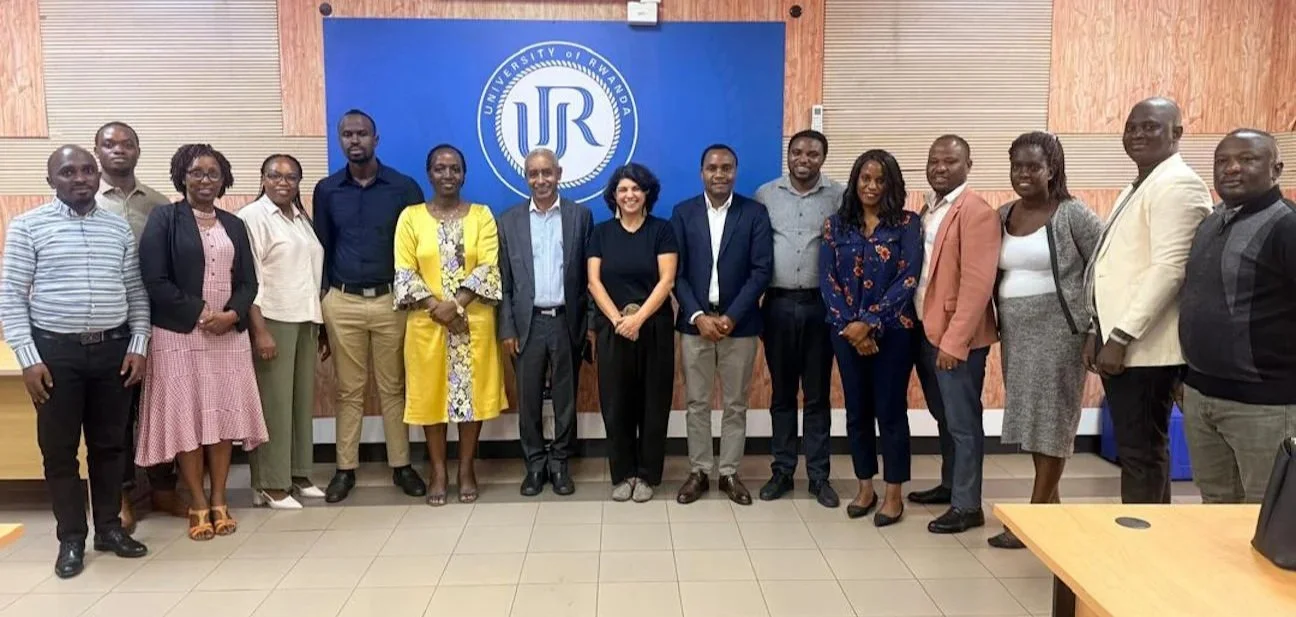
Gathering at the University of Rwanda are participants of a planning meeting for the master’s program in nursing and noncommunicable disease management in development at the University of Rwanda’s School of Nursing and Midwifery. Dr. Oliva Bazirete, the school’s dean, stands sixth from left, while Marta Patiño Rodriguez, associate director of education and training at the NCDI Poverty Network, and Gedeon Ngoga, the Network’s clinical advisor, stand at eighth and ninth from left, respectively.