With the guidance of visiting specialists, Dr. John Reuben has gained the confidence and skills he needed for treating patients with complex noncommunicable diseases, such as type 1 diabetes, sickle cell disease, and childhood heart disease.
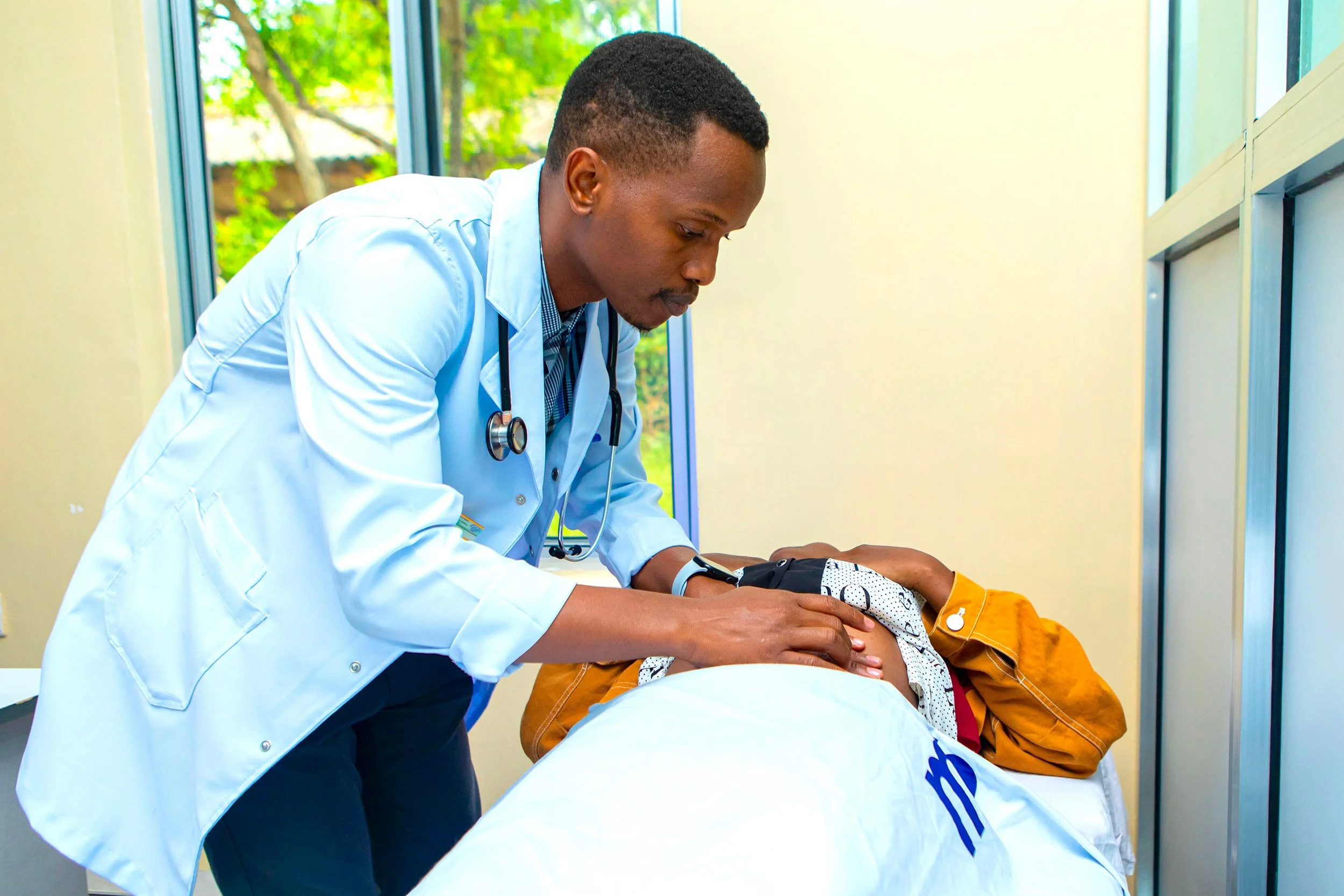
Dr. John Reuben examines a young patient with sickle cell disease. Since Tanzania opened its first PEN-Plus clinic at the district hospital where he works, Dr. Reuben said, he has gained skill and confidence in treating people with a range of severe noncommunicable diseases. (Photo: Courtesy of World Health Organization)
Once a month, specialists travel to Kondoa District Hospital in central Tanzania to see patients alongside Dr. John Reuben. For Dr. Reuben, the hospital’s district coordinator for noncommunicable diseases, those visits have become a hands-on education.
“There were certain tests I couldn’t perform at my level,” he said. “The specialists have taught me how to treat these patients more effectively.”
The mentoring is part of Tanzania’s PEN-Plus program. With the specialists’ guidance, Dr. Reuben has learned to use new laboratory equipment and now handles complex cases with more confidence.
It is a sharp change from how the hospital used to work. “Before PEN-Plus, our patients with severe noncommunicable diseases were treated in general outpatient clinics just like any other patient,” Dr. Reuben said. “There was no specialized program, no unique approach.”
Most of the hospital’s patients have low incomes and travel long distances for care, he said. Many struggled to pay for treatment, laboratory tests, and medication. Monthly follow-up visits were a logistical and financial burden, and there were no specialists to see them.
Now, alongside the monthly specialist clinics, essential laboratory equipment is in place, and medications for type 1 diabetes, sickle cell disease, and rheumatic heart disease, once unavailable at the district level, can be obtained locally.
Dr. Reuben often thinks about one patient who shows what that training makes possible. Yasini Issa Sefu arrived at the clinic unable to see. He had type 1 diabetes, but it had gone untreated for so long that it had taken his sight. Unable to work, he was confined to his home and entirely dependent on his family.
After enrolling in the PEN-Plus clinic and starting proper treatment, Sefu had surgery on one eye. With his sight partly restored, the 26-year-old now travels to the clinic on his own while he waits for surgery on the other eye.
Dr. Reuben sees the same pattern with many of his patients. People who were once confined to their homes now live like anyone else in the community, collecting their own medicine and supporting themselves.
“Seeing a patient move from being totally dependent to someone who can care for themselves gives us great strength,” he said. “Hearing a patient tell me, ‘Doctor, I can finally sleep well and do my work again,’ is what keeps me going.”