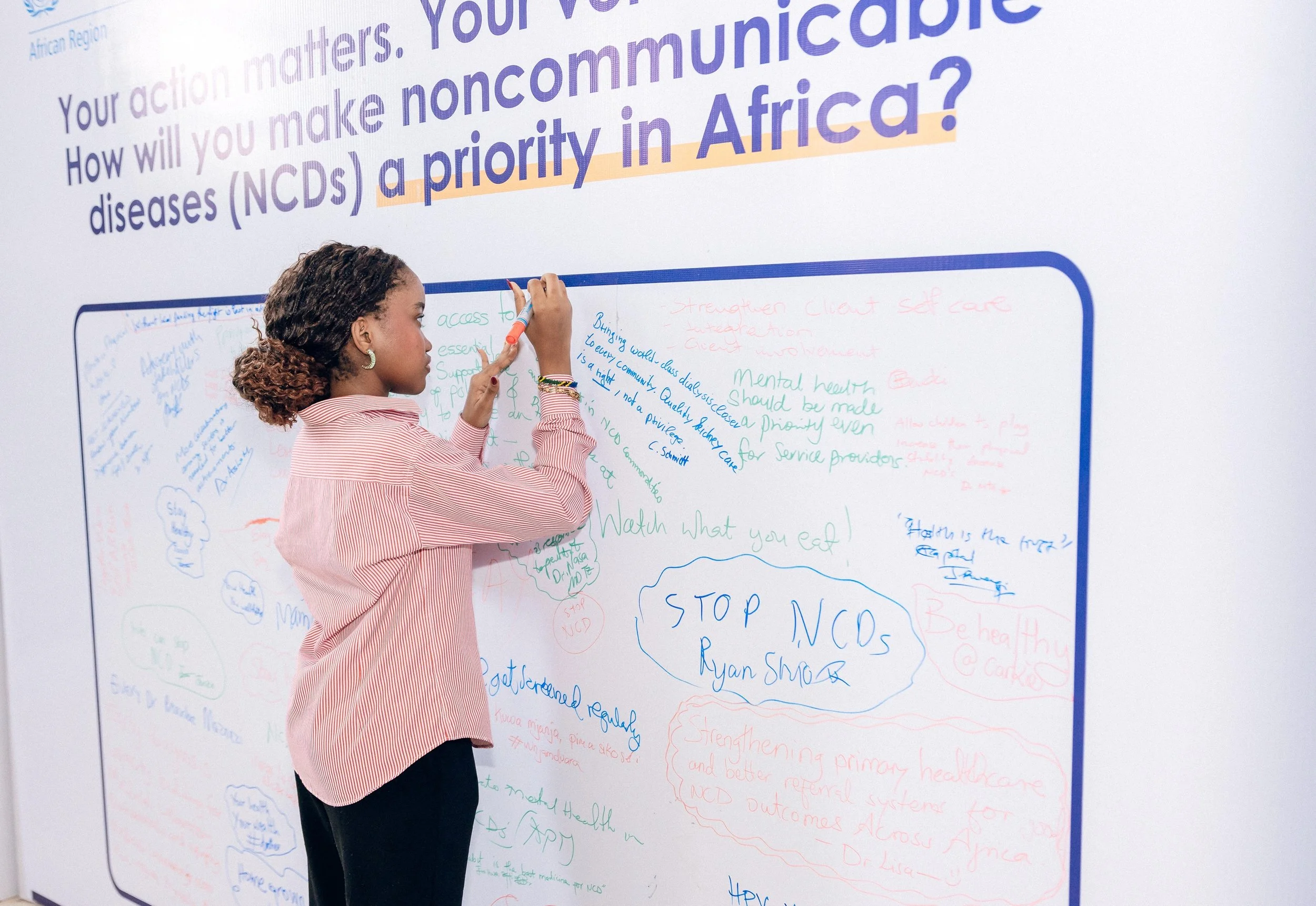
A whiteboard at the Third International Conference on PEN-Plus in Africa encouraged participants to express how they would take action on noncommunicable diseases, echoing a theme that emerged at the conference: “Your action matters. Your voice counts. How will you make noncommunicable diseases (NCDs) a priority in Africa?” (Photo: Courtesy of the World Health Organization)
The Third International Conference on PEN-Plus in Africa took place in the same Dar es Salaam venue that hosted the meeting series launch just two years ago. Yet the differences between the events revealed much about the progress of the PEN-Plus movement in that short time: The number of delegates had swelled from 400 to more than a thousand; cabinet-level ministers from eight countries attended, signaling high-level commitments from across the continent; and an additional 10 African countries began preparing for PEN-Plus initiation.
Perhaps the most important advancement, though, was less quantifiable: a dramatic shift in conversation.
“The presentations, the roundtable discussions, and even the hallway chats had all clearly evolved from the inaugural conference’s focus—what PEN-Plus is and what it can achieve—to how PEN-Plus can best be implemented and scaled up nationally,” said Dr. Gene Bukhman, co-chair of the NCDI Poverty Network. “The policy frameworks, expertise, and political will were all evident throughout the conference, and a growing number of African countries are now poised for national scale-up.”
The WHO African Region and the Government of Tanzania hosted the third conference, with the Leona M. and Harry B. Helmsley Charitable Trust providing funding and the NCDI Poverty Network serving as the lead strategic partner.
Also known as ICPPA 2026, the event provided a platform to review progress, share lessons, and reinforce national commitments to implement PEN-Plus, an integrated model for providing care to people living with severe, chronic noncommunicable diseases in low-resource settings.
“Africa must invest more now in addressing noncommunicable diseases with adequate and sustained resources,” said Dr. Mohamed Janabi, regional director for the WHO African Region, during the opening ceremony. “By strengthening the implementation of integrated approaches such as PEN-Plus, we can ensure that people living with severe NCDs receive the lifesaving care they deserve.”
Many participants echoed Dr. Janabi’s message, calling for stronger political leadership, increased domestic investment, and expanded access to prevention, diagnosis, treatment, and long-term care for people living with severe noncommunicable diseases, particularly childhood-onset conditions such as type 1 diabetes, sickle cell disease, and rheumatic and congenital heart disease.
Dr. Ana Mocumbi, co-chair of the Network, brought the high stakes of these conditions into even greater focus. “When you have a child with a severe, chronic noncommunicable disease in a low-resource setting, such as rural Mozambique, you have a family destroyed,” she said during a media briefing. “Individuals and families confronting these dire circumstances are often invisible, without voices. This conference helps give them a voice and creates conditions for them to become more visible.”
Sustained collaboration and country ownership of PEN-Plus also emerged as central themes of the conference.
“Many countries seeking to achieve scale-up will continue to rely on the international collaboration we’ve been able to build with our many partners,” said Rachel Gasana, the Network’s senior director of advancement. “As more and more countries adopt the PEN-Plus model and adapt it to their particular circumstances, the Network has a critical and evolving role to play in driving quality, equity, and financing for PEN-Plus.”
The continued success of PEN-Plus—not only in sub-Saharan Africa, but also in South Asia and the Caribbean, where the Network also works—shows that this shift from what to how is already paying off, said Dr. Bukhman. “Integrated health care delivery, strengthened by coordinated social movements, can improve health care for everyone and bring us closer to global health equity.”
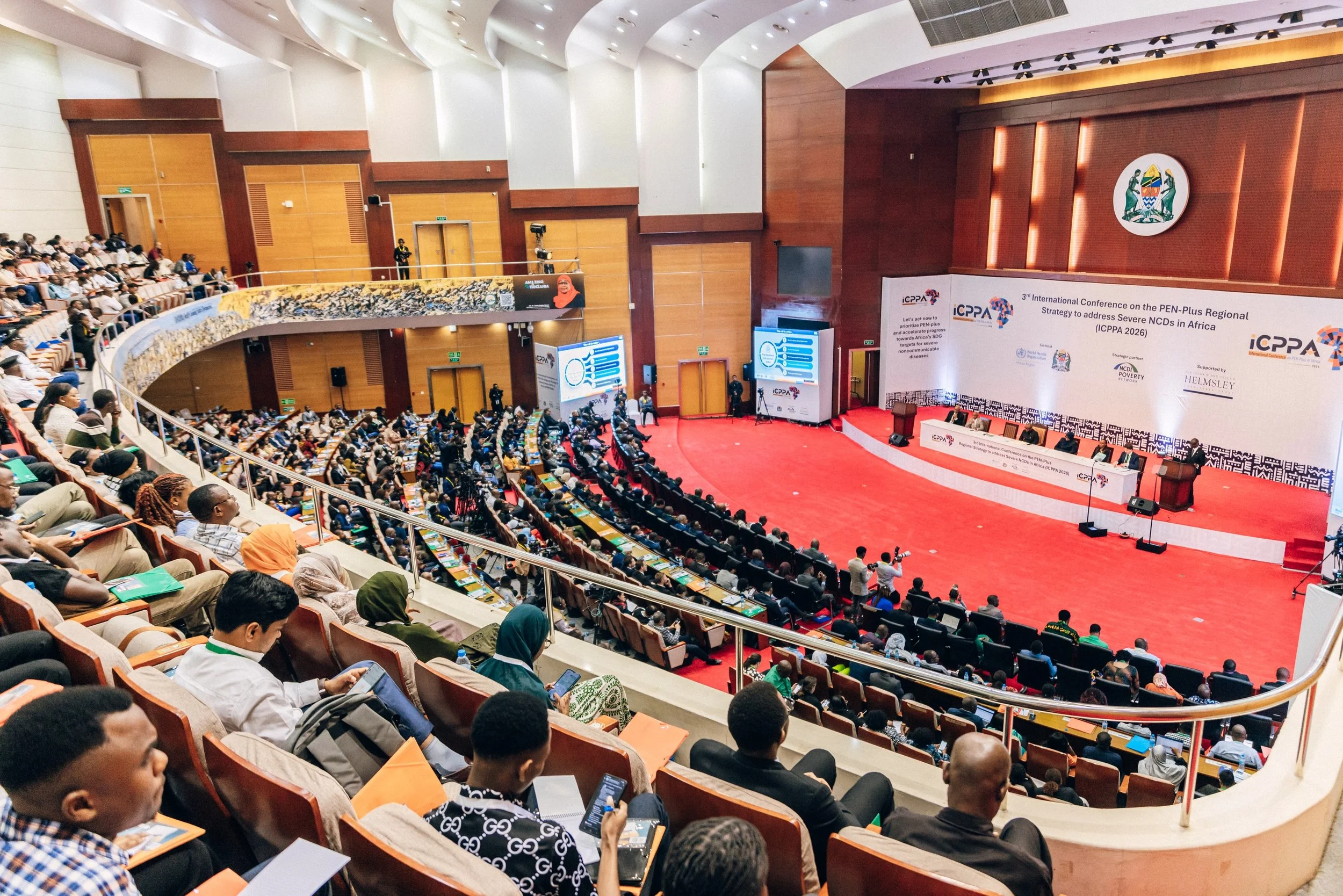
“Africa must invest more now in addressing noncommunicable diseases with adequate and sustained resources,” said Dr. Mohamed Janabi (shown at podium), regional director for the WHO African Region, during the opening ceremony of the Third International Conference on PEN-Plus in Africa. “By strengthening the implementation of integrated approaches such as PEN-Plus, we can ensure that people living with severe NCDs receive the lifesaving care they deserve.” (Photo: Courtesy of the World Health Organization)