A recent journal article details the success of integrated care for noncommunicable diseases amid an ongoing scale-up of PEN-Plus.
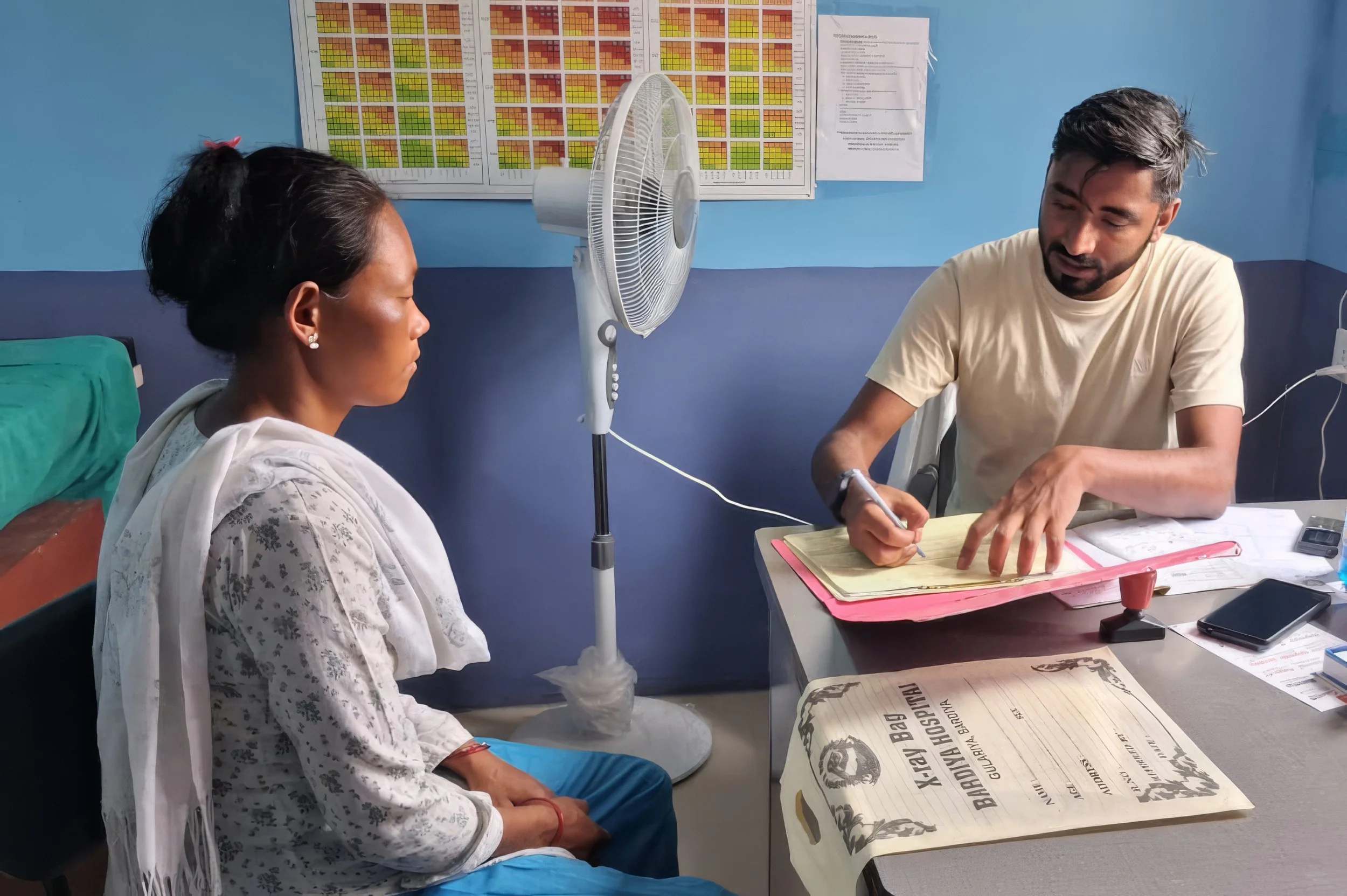
Dr. Ravi Barnwal provides care for a patient at the PEN-Plus clinic in the Bardiya District of western Nepal. The Kathmandu Institute of Child Health serves as the implementing partner for the Bardiya clinic, as well as for the PEN-Plus clinic in the Jhapa District in eastern Nepal. (Photo: Suraj Sujan Bohara)
PEN-Plus is thriving in Nepal, where health officials have expanded the country’s program from the initial two districts to six, with continued development planned to integrate care for severe, chronic noncommunicable diseases.
Nepal’s growing PEN-Plus program is seeing success in areas ranging from cardiac surgeries and diabetes management to mental health, community awareness campaigns, health screenings, and even school supplies.
BMJ Global Health recently published a paper—“Bringing severe non-communicable disease care to district-level hospitals in Nepal: PEN-Plus experience and policy implications”—that details the program’s success and plans for growth.
The Epidemiology and Disease Control Division of the Nepal Ministry of Health and Food Safety leads the PEN-Plus program, which as of May 2025 had provided care to 3,278 people at PEN-Plus clinics embedded in district hospitals, according to the article. More than 600 of those people are younger than 19, reflecting the program’s importance for childhood-onset noncommunicable diseases (NCDs) and child health.
While “national childhood NCD data are scarce,” the paper states, “a study from 15 tertiary hospitals showed that NCDs and injuries are common among children and adolescents,” indicating the need to strengthen systems for prevention, early diagnosis, and management of childhood NCDs.
The PEN-Plus model of integrated care is intended to bridge that gap and increase access, by decentralizing care for NCDs through strengthened training, resources, and referrals at district-level hospitals.
Nepal’s Ministry of Health and Food Safety introduced PEN-Plus in 2021, with the Kathmandu Institute of Child Health—also known as KIOCH—as the implementing partner and with financial support from the NCDI Poverty Network, through the Center for Integration Science in Global Health Equity at Brigham and Women’s Hospital in the United States. The partners initially piloted PEN-Plus in two districts, Bardiya and Jhapa.
More recently, UNICEF Nepal provided financial support to enable expansion to four more districts, with PEN-Plus clinics implemented in district hospitals in Siraha, Dailekh, Bajhang, and Gulmi.
“The expansion of PEN-Plus has been incredibly exciting, and already PEN-Plus is having a significant impact in the communities it serves,” said Dr. Sandeepa Karki, NCD specialist for KIOCH and a coauthor of the BMJ paper. “As more districts implement the program, referral systems and collaborations also continue to strengthen, as clinics share knowledge and learning with colleagues across the country.”
PEN-Plus in Nepal focuses on the model’s pillar severe NCDs—including type 1 diabetes, sickle cell disease, and rheumatic and congenital heart disease—along with thalassemia, childhood cancers, severe asthma, and neurological disorders such as autism and epilepsy.
The NCD burden in Nepal is severe. The WHO estimates that NCDs cause more than 70 percent of deaths in Nepal, with a rising incidence among young adults 18 to 30 years old.
Without PEN-Plus, district-level hospitals have lacked essential clinical resources for diagnosing, monitoring, and treating noncommunicable diseases, so people with suspected severe NCDs were referred directly to tertiary hospitals in urban centers, according to the paper. The implementation of integrated care has brought advanced services closer to underserved communities, by training staff on condition-specific care pathways and by strengthening the referral system at primary, secondary, and tertiary care levels.
PEN-Plus also involves a significant amount of social support for young people living with severe NCDs, along with support in their communities. Health leaders in Nepal have used the model to introduce targeted financial support for travel expenses to referral hospitals, enabling 18 PEN-Plus patients—and counting—to receive lifesaving cardiac surgeries at tertiary hospitals.
“Many families in Nepal travel for hours to reach care, facing difficult roads, monsoon weather, and challenging geography,” Dr. Karki said. “Beyond the illness itself, families often struggle with transport costs, medications, laboratory tests, nutrition, and the loss of daily wages, all of which affect their ability to continue treatment consistently. Through the support program, we have seen that assistance with transport, healthcare expenses, and basic needs reduces financial stress, improves follow-up attendance, and helps patients remain engaged in long-term care, particularly those traveling from remote areas.”
Social programs through PEN-Plus in Nepal also include targeted support for nutrition. Noting that children with type 1 diabetes and sickle cell disease can often suffer from undernutrition, PEN-Plus implementers provide eggs, fortified foods, and nutrition counseling to children and families. Educational support programs provide school materials—such as schoolbags, pens, and books—for economically disadvantaged households.
Because Nepal is not immune to stigma about NCDs, PEN-Plus implementers have further conducted school-based awareness activities and community campaigns, while providing access to counseling services and peer support groups.
The clinical and nonclinical benefits of PEN-Plus are poised to continue expanding in Nepal.
“Nepal’s PEN-Plus initiative shows that high-quality, specialized NCD care can be delivered at the district level, even in low-resource settings,” Dr. Karki said. “By linking clinical services with social protection, workforce development, and strong policy alignment, PEN-Plus provides a scalable model for managing severe, early-onset NCDs. Moving forward, strengthening decentralization, workforce capacity, and sustainable financing will be key to ensuring no patient is left behind. Nepal’s experience highlights that resilient, people-centered health systems must address both medical needs and the social and economic barriers that shape access to care.”
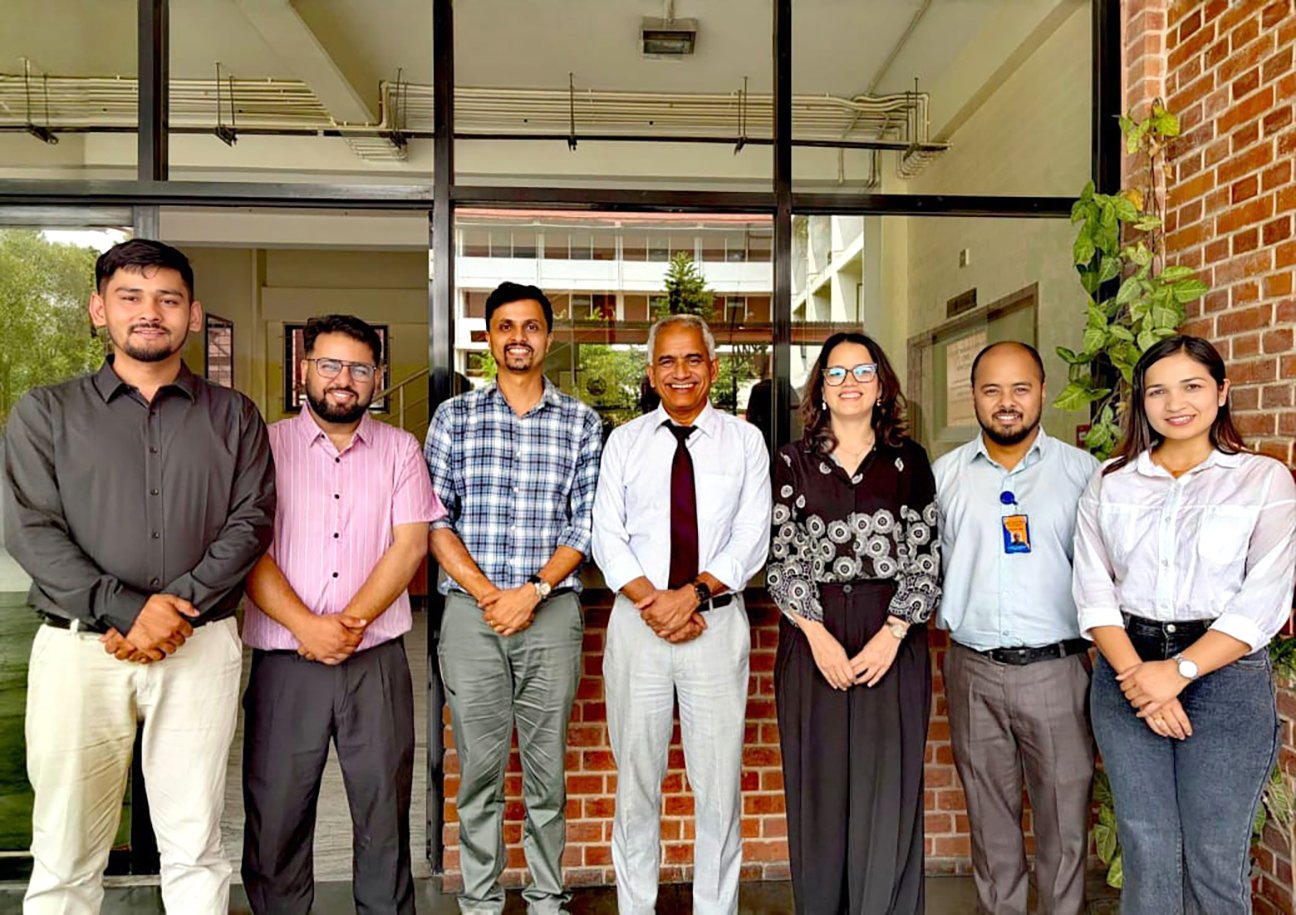
The central team members of the Kathmandu Institute of Child Health who work on PEN-Plus are, from left, Dhurba Khatri, senior social behavior change officer; Dr. Sakar Khanal, monitoring and evaluation coordinator; Sujan Poudel, monitoring, evaluation, accountability, and learning officer; Dr. Bhagawan Koirala, team lead; Dr. Sandeepa Karki, NCD specialist; Dr. Rudra Prakash Hada, pediatrician; and Yamuna Chhetri, program officer. (Photo: Thalindra Prasad Pangeni)