Two young siblings are now gaining postsurgical strength at their family’s home in Zimbabwe.
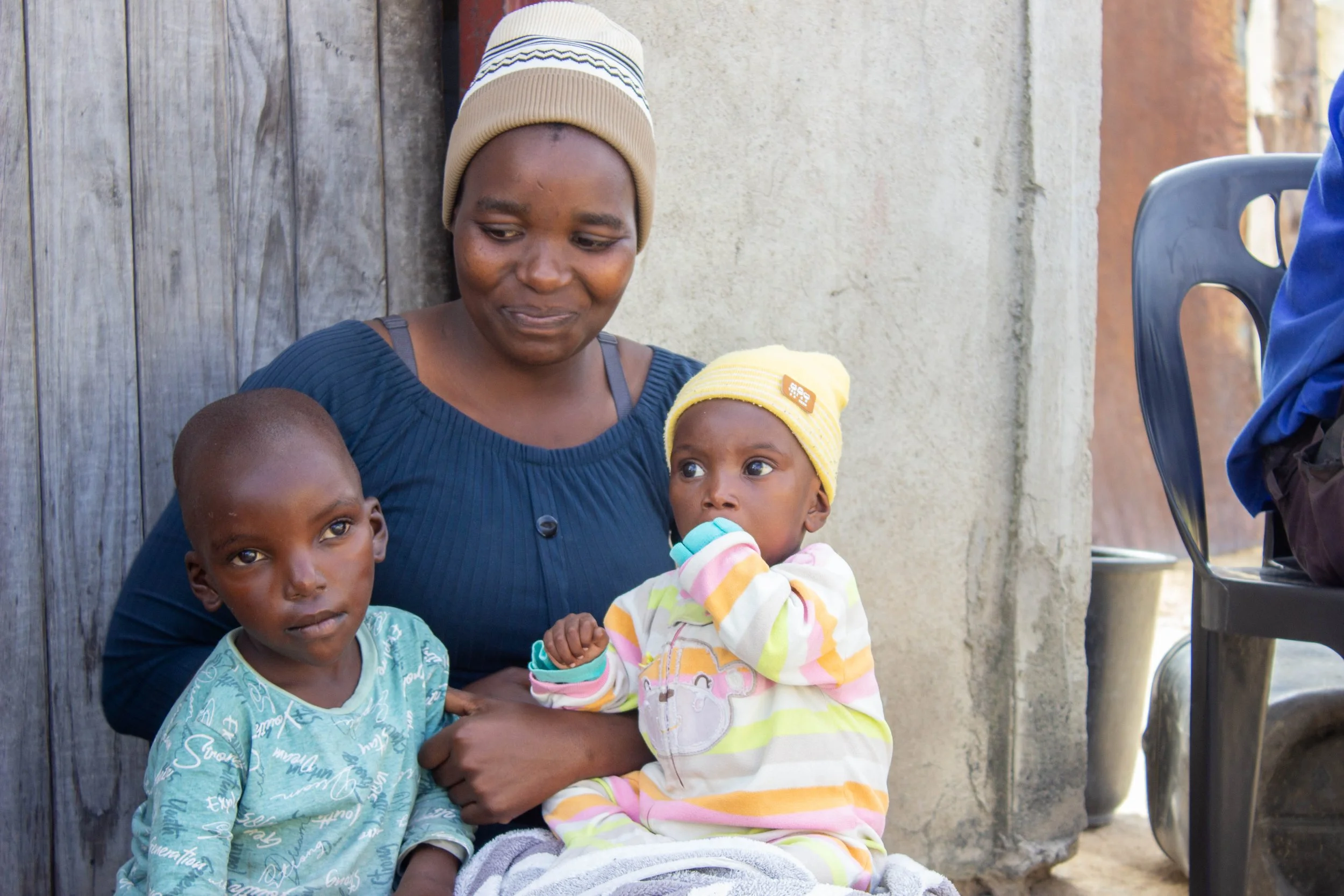
Atipa Manyuke, right, sits on his mother’s lap next to his younger sister, Tinenyasha. Both children received life-changing surgeries for congenital heart conditions through care and referrals at a PEN-Plus clinic in Zimbabwe. (Photo: Pius Moyo/SolidarMed Zimbabwe)
In a homestead with two neatly built structures—a one-room house and a thatch-roofed hut—three-year-old Atipa Manyuke tears across the yard chasing one of his family’s chickens. He’s laughing so hard he nearly trips over his own feet.
His mother watches from the doorway with the kind of joy that arrives only after fears have been dispelled. Not long ago, Atipa, who was too frail to walk, would groan in pain whenever she carried him on her back at their home in Masvingo District, Zimbabwe.
Cardiac surgery in 2025 changed Atipa’s life. Today, his mother can set him down anywhere and simply let him be a little boy.
Remarkably, he is not the only child in the family who has experienced a dramatic turnaround. Nearby, his baby sister, nine-month-old Tinenyasha, is recovering from her own cardiac surgery, completed this past spring, less than a year after her brother’s.
Searching for Solutions
The Manyuke family is no stranger to hardship, but nothing had prepared them for the discovery that Atipa, their second-born child, had a serious heart condition. As a baby, he struggled to breathe and coughed with a deep, chesty rasp. Eventually he could no longer breastfeed. Admitted at Masvingo Provincial Hospital at just five months old, he was diagnosed with a ventricular septal defect and referred to Mpilo Hospital in Bulawayo, the second-largest city in Zimbabwe.
What followed was a punishing, yearslong search for care. The family traveled to Bulawayo only to be shuttled between United Bulawayo Hospital and Mpilo Hospital as echocardiogram machines broke down and appointments were pushed from month to month. Unable to afford the expenses of travel and delayed care, they returned home more than once, staying afloat through the family’s small domestic poultry project, part-time jobs, and Atipa’s paternal grandmother, who cadged together bus money.
At one point, the family was told Atipa would need to travel as far as India; later he was referred to South Africa for surgery, Both options would have entailed costs far beyond what they could afford, despite years of saving.
“It was a painful experience,” recalled Atipa’s father, Tatenda Manyuke. “We would eat food with no cooking oil, despite having some money in the house, in a bid to save for the surgery.”
Manyuke said he initially questioned the diagnosis, finding it odd that an infant could have a heart condition. Relatives and neighbors offered their own diagnoses and prognoses: that the child was bewitched, that he wouldn’t live, that he would be permanently disabled. The family consulted spiritual healers and traditional remedies. Meanwhile, Atipa’s mother, Joyce Makwara, dreaded the everyday action of carrying her son on her back because of the pain it caused him.
Finding Hope
The turning point came through PEN-Plus, an integrated model of care for people living with severe, chronic noncommunicable diseases—including congenital cardiac conditions—closer to families who would otherwise face impossible journeys and costs. Care providers at the PEN-Plus clinic in Masvingo treated Atipa and referred him to specialists, including Dr. Davidzo Murigo-Shumba, a pediatric cardiologist.
In 2024, Atipa was shortlisted for surgery. But years of worry and concern proved hard to overcome: Makwara, overwhelmed, initially canceled the booking. An uncle urged the family to continue, insisting surgery was the right course of action, and PEN-Plus nurses reinforced the message, gently but persistently. Atipa’s parents decided to move forward.
In July 2025, Atipa underwent cardiac surgery at Parirenyatwa General Hospital in Harare, Zimbabwe’s capital. The PEN-Plus program paid not only for the surgery, but also for Makwara’s travel expenses to Harare to be with her son.
The surgery succeeded. The child who once had groaned under the weight of his own breath was now, finally, on the path to recovery.
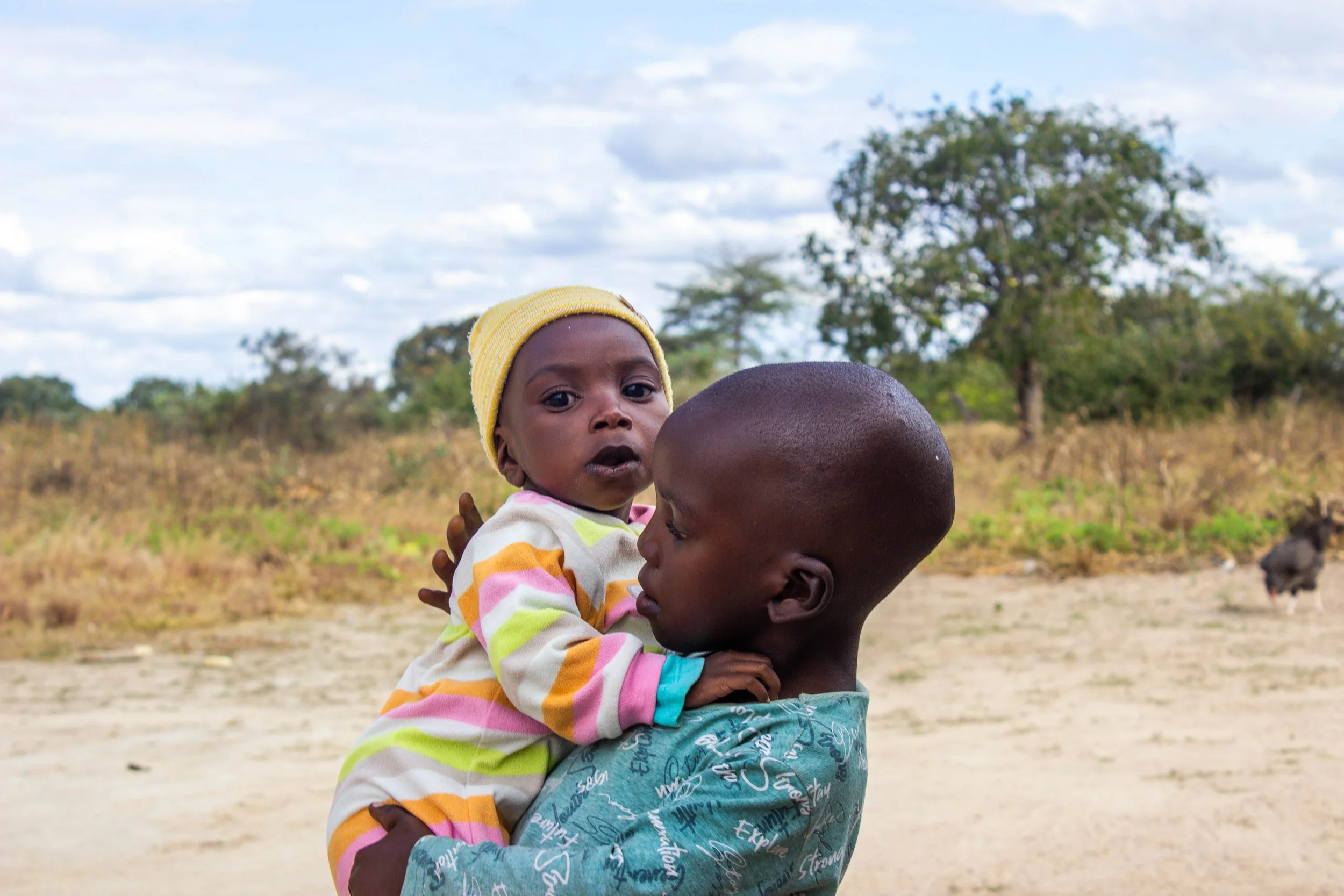
Atipa Manyuke holds his nine-month-old sister, Tinenyasha. The two siblings received surgery for congenital heart defects just a year apart. (Photo: Pius Moyo/SolidarMed Zimbabwe)
A Second Diagnosis
Barely had the family caught its breath when a second, unexpected diagnosis arrived.
During Atipa’s nine-month surgical follow-up at the PEN-Plus clinic, nurse Joyline Chihota asked his mother to take him to Masvingo Provincial Hospital, where Dr. Murigo-Shumba happened to be consulting. During the visit, after mentioning, almost in passing, several observations she had about Tinenyasha, Makwara saw Dr. Murigo-Shumba’s expression change. An echocardiogram followed and Tinenyasha, too, was diagnosed with a congenital heart condition needing urgent attention.
“As I was trying to recover from the trauma of Atipa’s surgery, this was another heavy blow,” Makwara recalled.
Tinenyasha was started on medication while she awaited surgery. In April 2026, she underwent cardiac surgery at Parirenyatwa General Hospital, following the same coordinated referral pathway—from the PEN-Plus clinic to specialists and a referral hospital—that had supported her brother a year earlier.
Running Strong
Both children are now enrolled in ongoing post-surgical follow-up through the PEN-Plus program, with regular checkups, support for medication adherence, and monitoring from the same nurses who had walked the family through their darkest moments.
For Atipa, the transformation is visible in every burst of energy: no more groaning and no more labored breathing for a boy finally free to be as joyful as any three-year-old should be.
“He is so playful now,” Makwara said, smiling. “He can run, which was not possible before. It’s delightful to watch him.”
Tinenyasha’s recovery is still unfolding, but she now has what her brother once lacked: a health system that reaches her family, ready to catch her early.
The family has also picked their poultry project back up, another small but meaningful sign of stability restored.
“It was a painful experience, but we are grateful to the project team for support that felt, at one point, like an impossibility,” Manyuke said.
Atipa and Tinenyasha’s story reflects how PEN-Plus strengthens health systems and helps families navigate care for severe noncommunicable diseases. Surgical care for congenital and rheumatic heart conditions does not end at the operating table. Atipa and Tinenyasha continue to receive their ongoing medication, monitoring, and support at the PEN-Plus clinic.
Zimbabwe’s PEN-Plus program now spans three districts: Zaka, Bikitam, and Masvingo. Many people who receive care have stories like the Manyukes’: families that once faced enormous barriers to care now supported through coordinated pathways of diagnosis, referral, surgery, and follow-up care.
Atipa’s mother has one piece of advice for other parents facing what she once did: take doctors’ and nurses’ advice seriously. She believes that without the surgeries, her children might not have lived. Now, she and her husband say they would gladly help convince other hesitant families to take the same leap of faith they did, twice.
Written by Pius Moyo, communications officer for SolidarMed Zimbabwe, which administers Zimbabwe’s PEN-Plus clinics in collaboration with the Clinton Health Access Initiative.