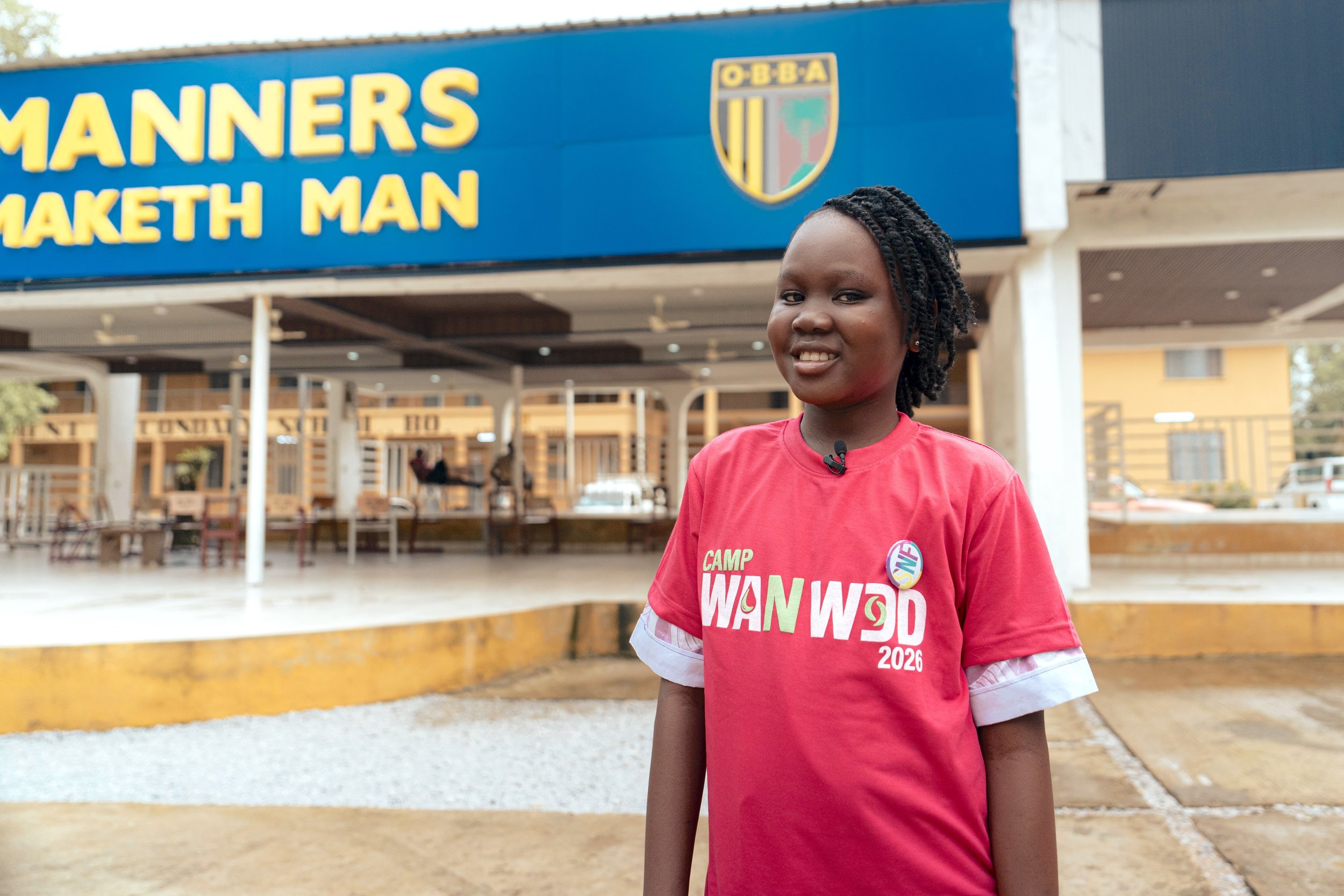
Twelve-year-old Yatta Kamara lives with type 1 diabetes in southeastern Sierra Leone. She receives insulin and care at the PEN-Plus clinic at Koidu Government Hospital, where staff facilitated her participation in Camp Wanwod in August. She had a transformative week at camp, engaging with peers and sharing experiences from her life in the city of Kenema. (All Photos: Federico Bruckner / courtesy of CUAMM)
At Camp Wanwɔd in Sierra Leone, where 60 young people gathered in August for a week of health education and empowerment, one of the youngest voices was also one of the strongest.
And nearly four months later, that voice is stronger than ever.
Twelve-year-old Yatta Kamara lives with type 1 diabetes in Kenema, the hub of a rural region in southeastern Sierra Leone. She receives care and insulin at the PEN-Plus clinic at Koidu Government Hospital, more than 70 miles from her home. Care providers at the clinic nominated Yatta to attend the camp, which was held in the city of Bo, more than 40 miles away in a different direction.
That meant Camp Wanwɔd found Yatta far from home, surrounded by new people in a place where many of her fellow warriors—young people living with either type 1 diabetes or sickle cell disease—were older teenagers or even in their early 20s, significantly older than Yatta.
New location, new people, new camp environment.
None of those factors stopped her from making her voice heard. Whether in front of the entire camp or in small groups of friends, and even as she battled illness during camp, Yatta’s voice and energy were constant during the week.
“Yatta was such a strong presence throughout the camp,” said Dr. Alma Adler, director of research for the NCDI Poverty Network. “She was not shy at all when interacting with her peers or older warriors. She had things to share and made sure to share them, with eloquence and emotion that were beyond her years.”
Yatta’s mother, Fatmata Kamara, said the week of solidarity and sharing experiences with other young people made a lasting impression on her daughter.
“She loved the camp, and she learned so many things,” Kamara said. “She always talks about the camp—the activities they did and the time she spent with friends.”
Social Barriers
In many sub-Saharan African countries, including Sierra Leone, living with a severe, chronic noncommunicable disease, or NCD, is not easy. People living with NCDs like type 1 diabetes, sickle cell disease, and childhood-onset heart disease can face stigmatization in their schools and communities, stemming from a lack of awareness about their condition. Getting reliable health care and medicine, or even an accurate diagnosis, can be extremely difficult in rural areas especially.
The PEN-Plus model of care bridges that gap by strengthening health systems and supporting rural health facilities with the training and resources they need to provide integrated care for NCDs. PEN-Plus is more than a package of clinical services; the model also involves initiatives—such as PEN-Plus camps—to support children, adolescents, and young adults who are facing social barriers and challenges because of their condition.
Camp Wanwɔd was organized by the NCDI Poverty Network in partnership with Doctors with Africa CUAMM, an international nongovernmental organization committed to health promotion; Partners In Health–Sierra Leone, which works with the country’s Ministry of Health to strengthen health systems and services; and the Sonia Nabeta Foundation, whose programming includes organizing camps for young people living with type 1 diabetes.
CUAMM operates the PEN-Plus clinic in Sierra Leone’s Pujehun District, while Partners In Health–Sierra Leone manages the country’s other PEN-Plus clinic, at Koidu Government Hospital in Kono District.
Confidence and Joy
In addition to health education, advocacy training, recreational activities, and art, Camp Wanwɔd featured music therapy. Throughout the week, the Music Heals Initiative Sierra Leone had a band on stage in the main hall, from which they led sing-a-longs and other music-based activities.
The band was only slightly more joyful than Yatta, who approached camp with a friendly spirit that was evident in a video call this month.
“Hello! It’s good to see you!” she said when the call connected, popping into the frame next to her mother and waving.
Fatmata Kamara said her daughter has been taking her medicine on time since camp—three doses of insulin a day, after checking her blood sugar each time—while also showing more social engagement at school and with her friends.
Dr. Bernard Kakala, a clinician at the Koidu PEN-Plus clinic who served as camp doctor, reported that he also has noticed a difference in Yatta’s demeanor.
“She is able to manage her blood sugar levels,” said Dr. Kakala, who has seen Yatta regularly since August. “And she is so confident.”
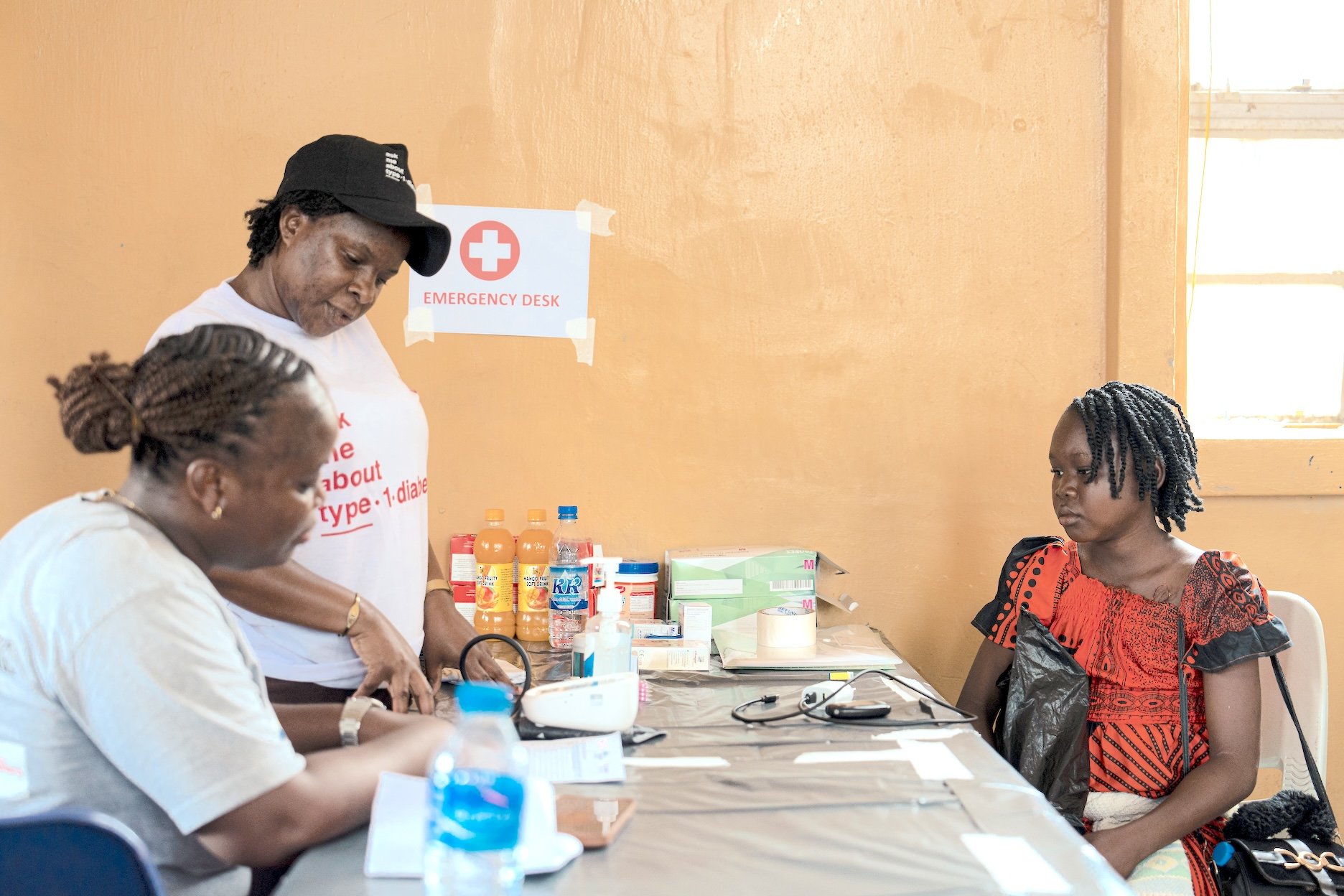
Monday, Aug. 3: Yatta Kamara, 12, looked a little somber while receiving her health check-in after arriving at Camp Wanwod, where she was in a new place and surrounded by new people, many of them several years older than her.
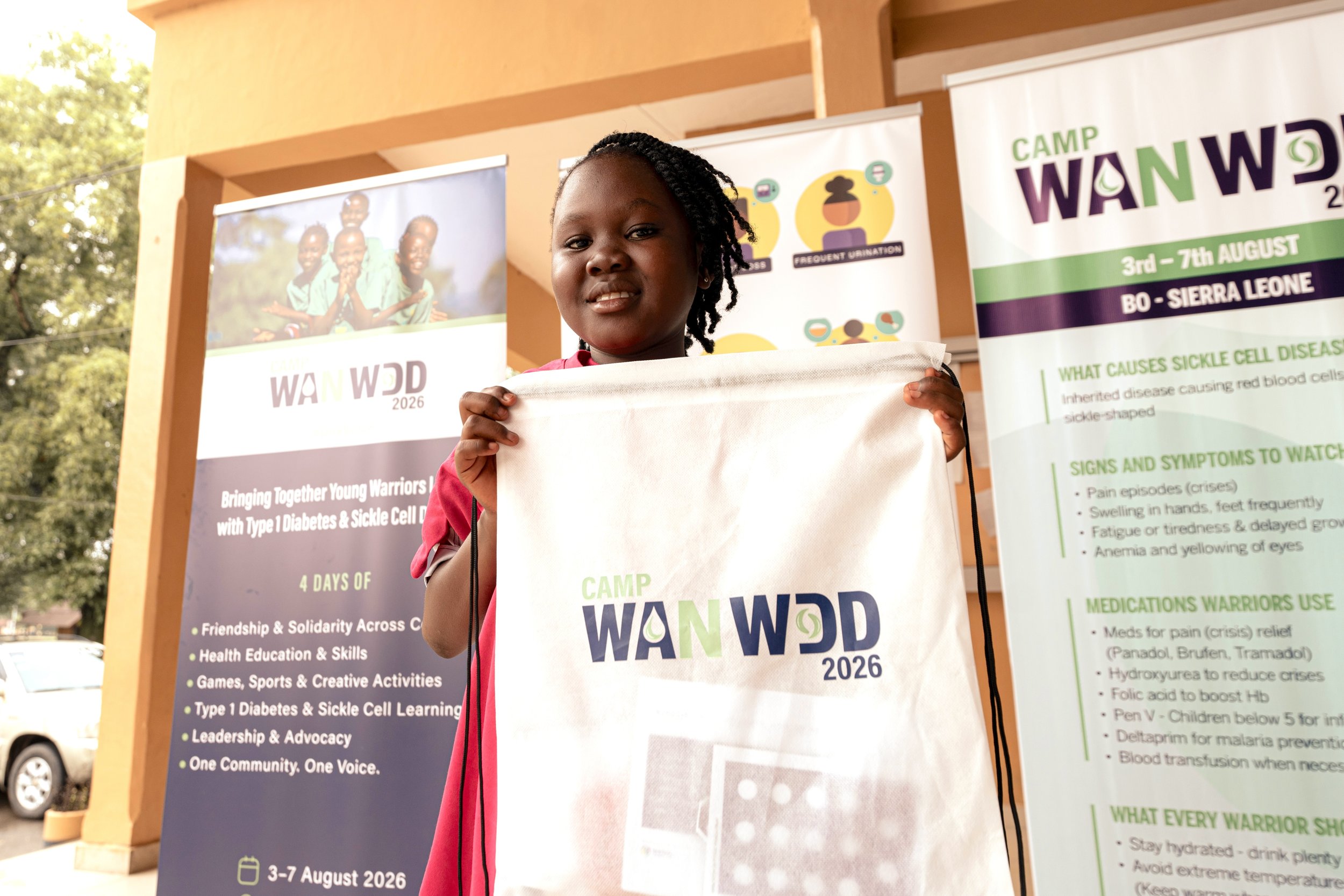
Tuesday, Aug. 4: A smile started to emerge as Yatta received her camp gear and got her bearings on the first full day of Camp Wanwod.
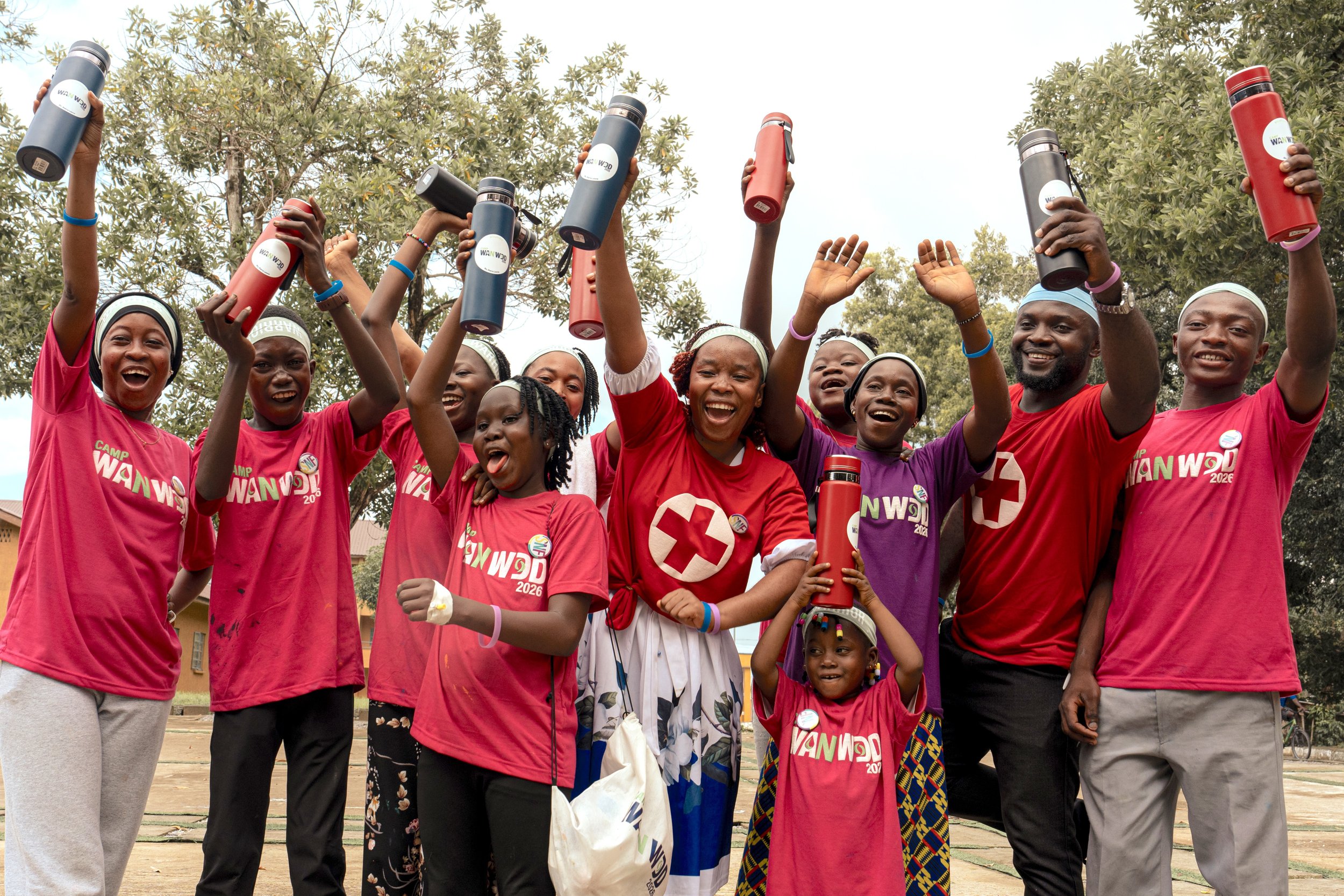
Wednesday, Aug. 5: What a difference two days make! Yatta, in the middle with a bandage on her hand and tongue stuck out, celebrated with teammates after winning water bottles in sports activities at Camp Wanwod.