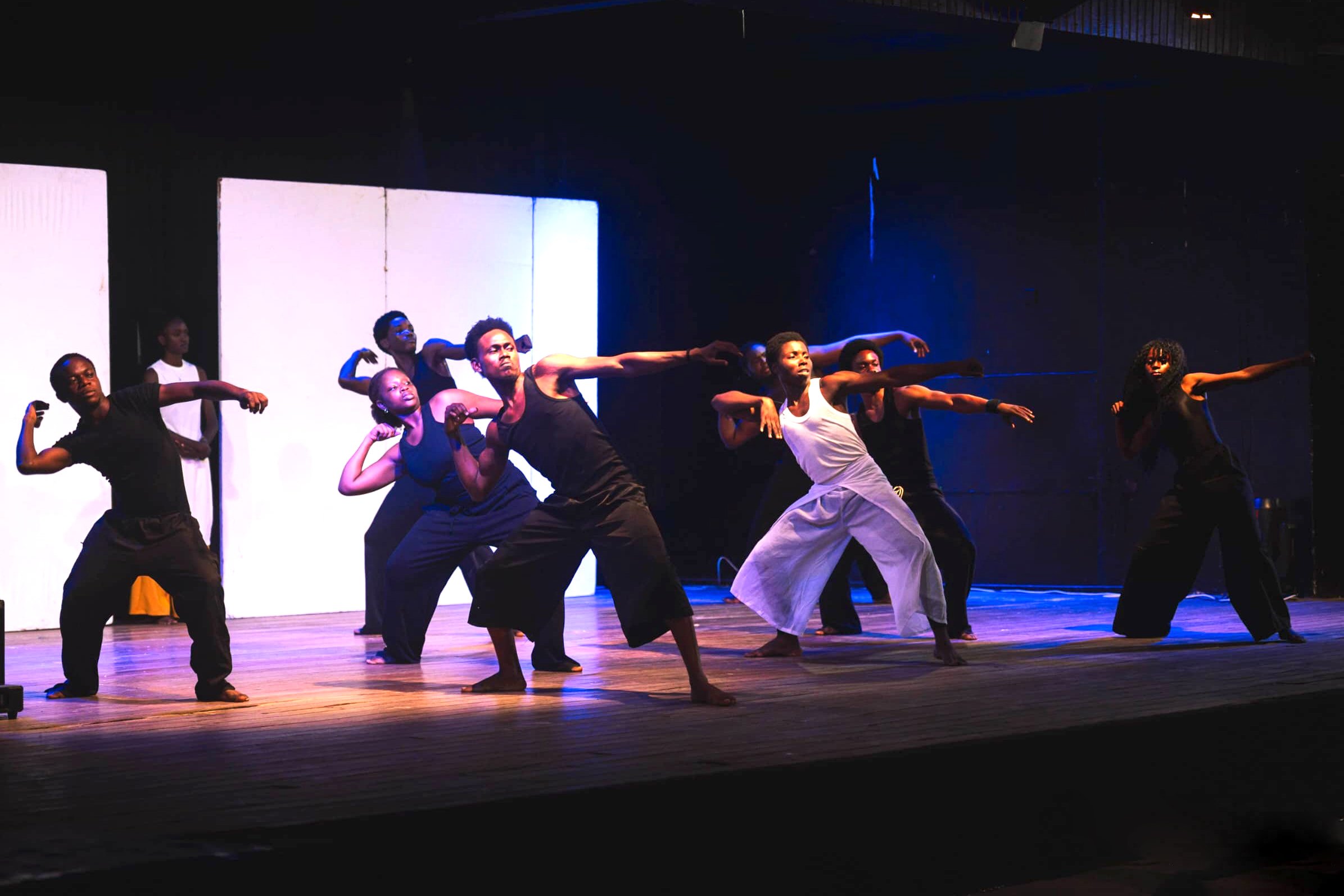
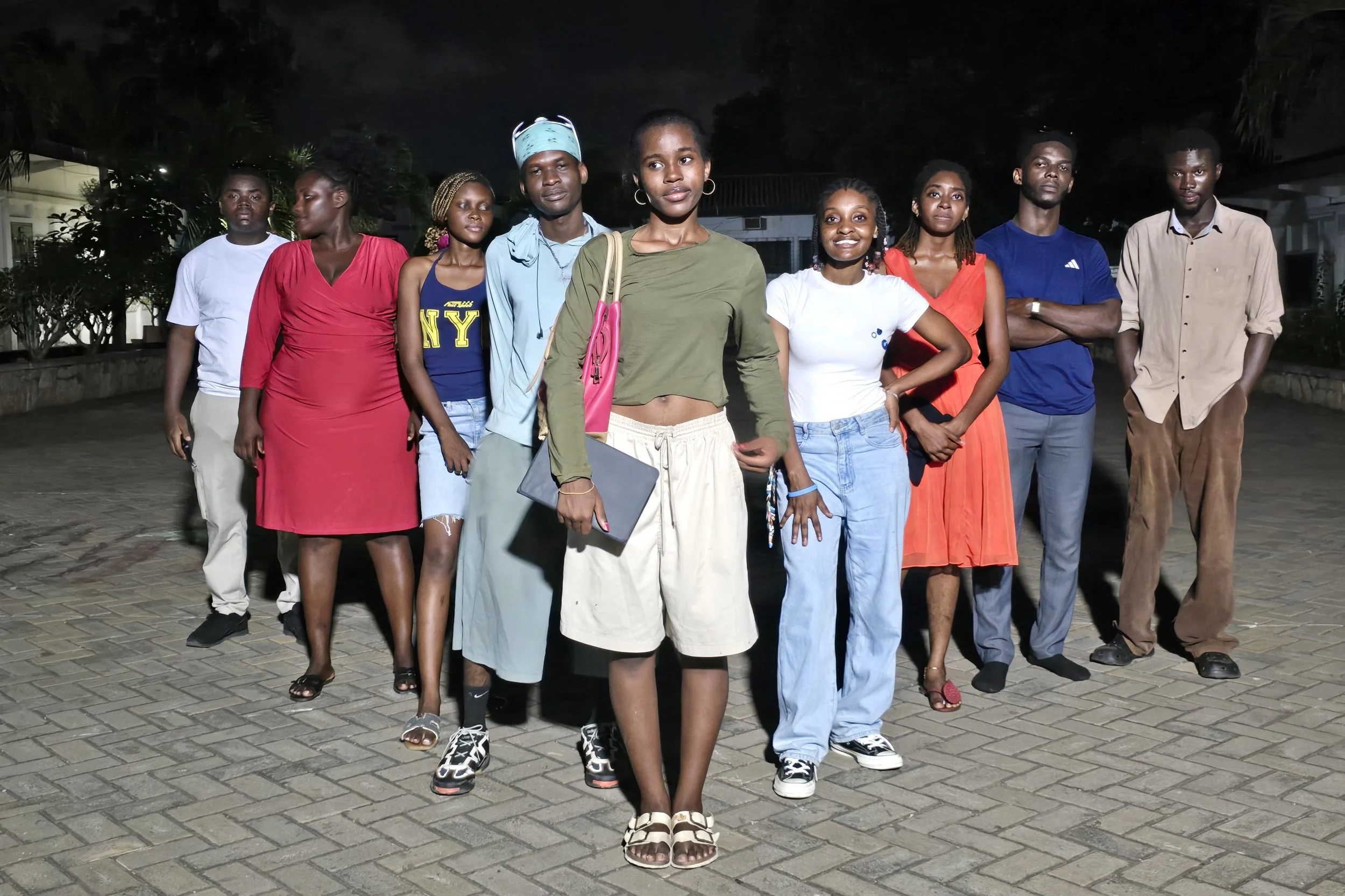
Voices for PEN-Plus member and diabetes advocate Emmanuella Selasi Hormenoo, fourth from right in a white T-shirt and jeans, stands with the student-led cast of “Unspoken,” a theatrical production performed earlier this month at the University of Ghana in Accra. The production raised awareness about the challenges and realities of living with severe, chronic noncommunicable diseases, with scenes dedicated to living with type 1 diabetes, sickle cell disease, and chronic kidney disease. (Photo: Courtesy of Emmanuella Selasi Hormenoo)
When Emmanuella Selasi Hormenoo and her fellow advocates were planning a theatrical production in Ghana to raise awareness about three severe, chronic noncommunicable conditions—type 1 diabetes, sickle cell disease, and chronic kidney disease—their primary concern was that their messaging would not be understood.
“We prepared for an audience who knew likely nothing about the conditions—or, if they had heard something, it was most likely to be misconceptions,” she said. “They would already have specific ideas about what these conditions were.”
The name of the production—“Unspoken,” performed in early No at the University of Ghana in Accra—reflects the stigma, social barriers, and lack of awareness many people living with severe NCDs face in Ghana and across sub-Saharan Africa.
Hormenoo works to address these barriers as a diabetes and adolescent health advocate in Ghana. She is also a member of the NCDI Poverty Network’s Voices for PEN-Plus advocacy team, which centers people with lived experience in policy discussions on NCD care.
A Network mini-grant awarded through the Voices program covered the costs of production, props, costumes, and venue rental for the play, which sought to use storytelling and performing arts as tools for health education, stigma reduction, and social change. The all-volunteer cast included performing arts students from the university, which Hormenoo had attended herself, graduating in 2024 with a degree in linguistics.
Unspoken has three scenes: the first about sickle cell disease, the second about type 1 diabetes, and the third about chronic kidney disease, a rising health concern in Ghana.
Hormenoo said the scenes of everyday life for people living with NCDs were intended to be as realistic as possible, and included scenes in which characters passed away. Hearing about a friend or acquaintance who has died of an NCD, she said, is a sorrowful reality.
Bringing these often-overlooked experiences to the stage, Hormenoo said, is intended to encourage meaningful conversations, strengthen solidarity, and inspire collective advocacy for improved health care access and support for people living with NCDs.
Hormenoo said sharing information theatrically rather than in a lecture or classroom setting—and portraying frustration, anger, and the impact of stigmatization—was how members of the production hoped to ensure that audience members who arrived with misconceptions could understand their messages.
“When people already have an implicit bias, just speaking to them does not help,” she said. “It makes them feel defensive, and they clamp down on what they believe. But when people can feel emotions, they are more likely to relate to the performance. They may not have had the same experiences, but they likely have felt or experienced something that has affected them emotionally or psychologically.”
Those ideas proved true with the Unspoken audience. The dozens of people in attendance, Hormenoo said, reacted enthusiastically to the show and were engaged in the question-and-answer session that followed.
“The impact was greater than I expected,” she said. “Many people asked questions, and several audience members spoke about people they knew who had these conditions. They said they hadn’t understood it before, and they wanted materials to help their friends. We also brought out medical devices—glucometers, everything—and we explained what each one was used for.”
Raising awareness about gaps in health care systems—and supporting integrated care for NCDs through the PEN-Plus model of care delivery—are integral to the mini-grants program for the Voices for PEN-Plus team. Additional mini-grants are supporting blood bank programs and strategic planning for health systems in Tanzania, along with supply chain analyses and insights in Kenya.
The partnership with Abysmal Productions, a student-led production house in Ghana, also has hosted recent art exhibitions, dance performances, mental health sessions, and more, to support local young people living with NCDs.
Hormenoo reported that many Unspoken audience members said they were excited for future productions.
“I hope we can do more next year,” she said.
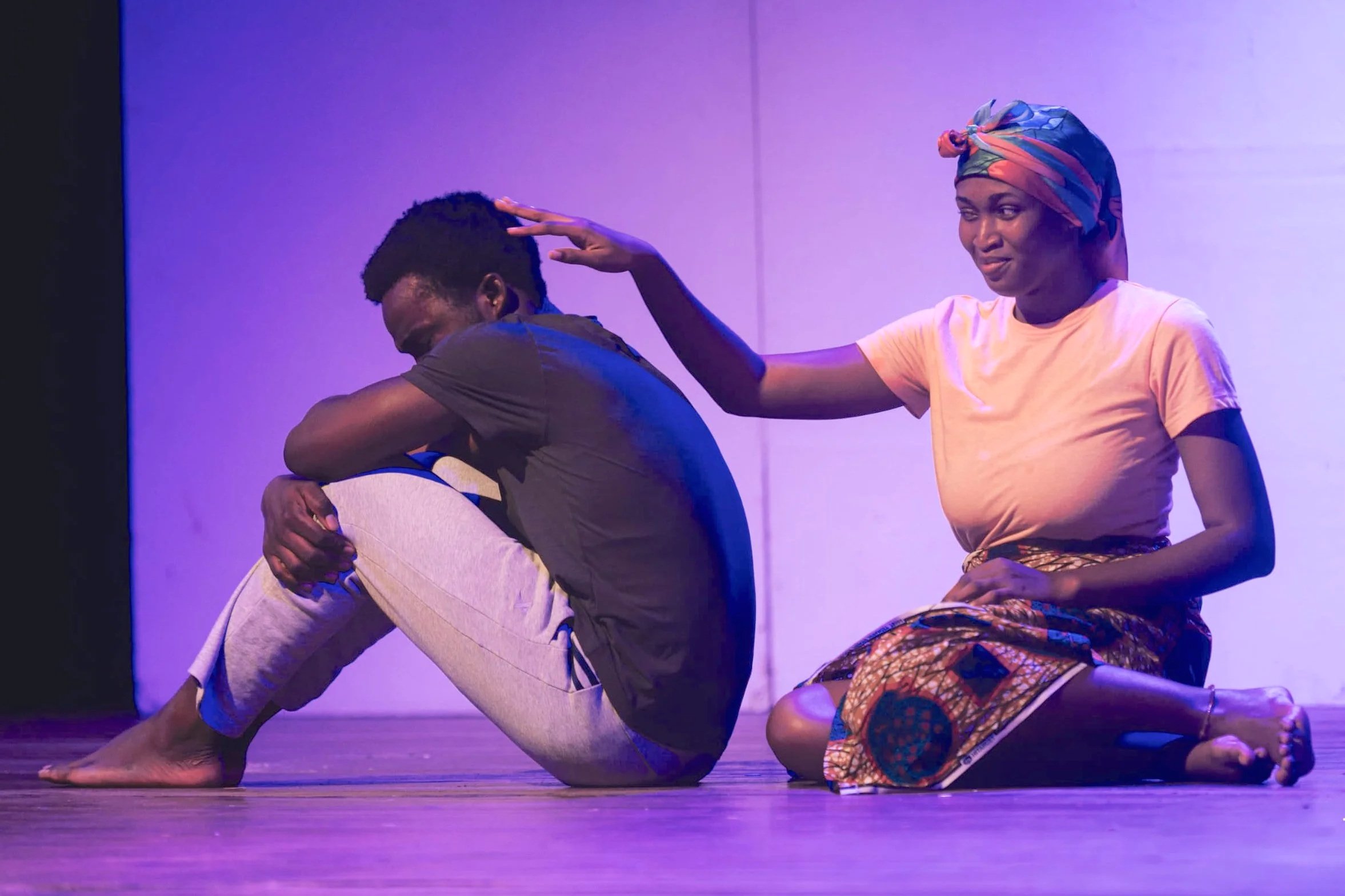
The performance of “Unspoken” was part of a partnership with Abysmal Productions, a student-led production house in Ghana that also has hosted recent art exhibitions, dance performances, mental health sessions, and more, to support local young people living with NCDs. Photos above and below show scenes from recent performances, which have intentionally focused on audiences who may arrive at the performances with little information about NCDs, but ideally leave with increased awareness, knowledge, and empathy for the stigma and isolation many young people living with NCDs in Ghana routinely face. (Photos: RK Photography)