‘The Way We Do Things’
Dr. Justice Mudavanhu, a Ministry of Health expert, reports that Zimbabwe’s PEN-Plus national operational plan, launched just last year, has already helped transform PEN-Plus implementation from a partner-driven activity in one corner of the country to a Ministry of Health program poised for national expansion.
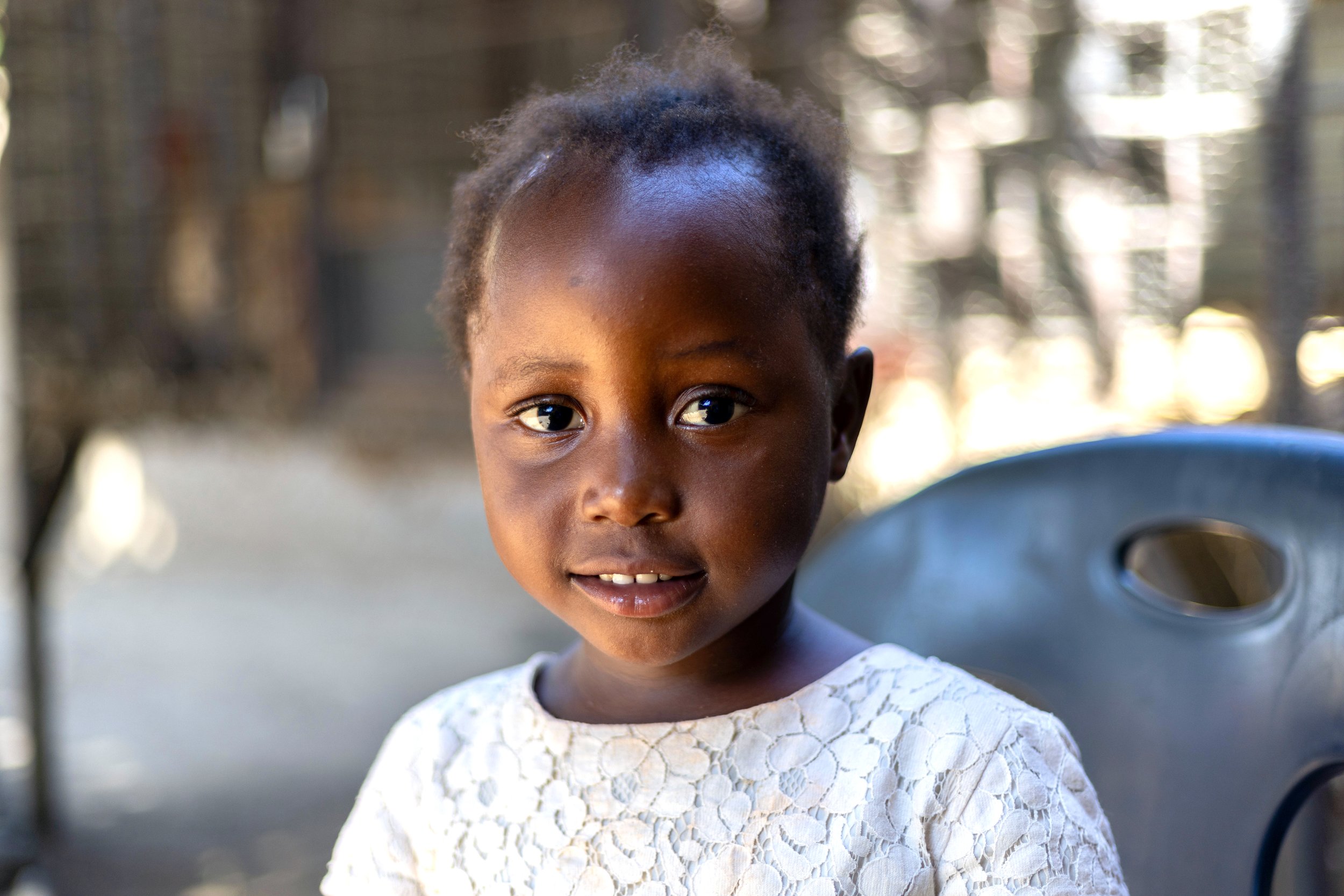
Three-year-old Ruvarashe Chikombe, photographed here outside her home in rural Zimbabwe, receives treatment for her sickle cell disease at the PEN-Plus clinic in Masvingo Province, in the southeastern part of the country. (Photo: © Tafadzwa Ufumeli/World Health Organization)
Over the years, Dr. Justice Mudavanhu has seen his share of fancy plans that ultimately proved ineffective. So when Zimbabwe embarked on developing a national operational plan for PEN-Plus, he knew the plan could be neither fancy nor ineffective. It had to be real.
"It’s one thing to have a high-level strategy that looks good in a boardroom in Harare,” said Dr. Mudavanhu, director of noncommunicable diseases for the Zimbabwe Ministry of Health and Child Care. “It’s another thing entirely to create a granular, costed, implementable document that makes sense to a nurse working alone in a rural hospital. We couldn't afford for this to be a theoretical document that sits on a shelf. It had to be a practical tool.”
That mindset became the driving force behind Zimbabwe’s National Operational Plan for PEN-Plus, which the country launched in April 2025. Zimbabwe was the first country to achieve that milestone among a cohort of a dozen nations that began implementing PEN-Plus in 2022–23.
‘A Fundamental Shift’
PEN-Plus is a model for integrated care and a package of clinical services for people living with severe, chronic noncommunicable diseases (NCDs), such as type 1 diabetes, sickle cell disease, and childhood heart disease. The NCDI Poverty Network partners with governments and organizations around the world to support PEN-Plus programs in low- and lower-middle-income countries, with a particular focus on children, adolescents, and young adults.
Zimbabwe is developing and scaling its PEN-Plus program with support from the NCDI Poverty Network and two implementing partners: SolidarMed, a Swiss nongovernmental organization that bases its Zimbabwe work in Masvingo Province, where Masvingo Provincial Hospital is a hub for PEN-Plus implementation and care, and the Clinton Health Access Initiative, based in the United States and better known as CHAI.
In a recent interview, Dr. Mudavanhu said the national plan has been transformative for integrating NCD care in Zimbabwe.
“The adoption of our National Operational Plan changed everything,” Dr. Mudavanhu said. “PEN-Plus is no longer a partner-driven activity in one corner of the country; it’s now a national program, owned by the Ministry of Health. That is a fundamental shift. It means we have one standardized framework for how these services will run, from clinical governance right down to how medicines are supplied.”
Dr. Mudavanhu said the plan is enabling expansion of PEN-Plus from one province to seven.
“The ink is barely dry on the plan, and we have already been able to initiate the decentralization of care for severe noncommunicable diseases to six new district hospitals,” he said. “This plan gives us the mandate and the standardized model to integrate care for conditions like type 1 diabetes in children, rheumatic heart disease, and sickle cell disease directly into district-level platforms. It’s about ending the situation where a child in Hurungwe District must travel impossible distances for a lifesaving insulin refill. We are bringing critical services to the people who need them, systematically.”
Dr. Mudavanhu said the plan also is grounded in local evidence, to “bridge the gap” from a Harare boardroom to a rural hospital, or from fancy to real.
“With crucial and timely support from UNICEF Zimbabwe, we didn’t guess. We went out and conducted a comprehensive baseline assessment in all six of those scale-up districts before we wrote the final plan,” he said. “We quantified the actual patient burden, mapped the human resources on the ground, and detailed the gaps in medicines and diagnostics. That was vital; it grounded everything in our reality.”
A Binding Framework
Dr. Neil Gupta, senior director of policy for the NCDI Poverty Network, said the plan’s conclusions echo those of the Network’s PEN-Plus Partnership Strategic Plan (2025–2028), which lists the major PEN-Plus priorities as equity, quality, and financing.
“We aim to support our partners, both governments and implementers, in gathering information and customizing their national plans to the specific chronic conditions affecting young people in their countries,” Dr. Gupta said. “Our hope is to support our partners in filling the gaps in local health systems so all communities can provide access to the services that people living with severe, chronic diseases need.”
In the case of Zimbabwe, Dr. Mudavanhu credits the NCD and Mental Health Department of the Ministry of Health and Child Care with a “masterful job” in coordinating expertise from diverse partners—including the WHO Regional Office for Africa and SolidarMed—into a single, coherent voice and vision.
That vision instills PEN-Plus principles throughout Zimbabwe’s health system, Dr. Mudavanhu added.
“The plan must be a binding framework that compels integration, so you write the integration into the plan itself,” he said. “Our NOP is not an add-on project; it is a government instrument that mandates the inclusion of PEN-Plus into the standard national training curriculum for nurses, into our essential medicines list, into the national laboratory network, and critically, into our health information system.
“That was the watershed moment for us—understanding that for this to be sustainable, it couldn’t be a donor-defined boutique program. It had to become just ‘the way we do things’ in Zimbabwe’s health system.”
Road Maps Guided by Equity
PEN-Plus is becoming the way many countries deliver NCD care across sub-Saharan Africa and South Asia—and the need is urgent. In 2020, the Lancet NCDI Poverty Commission estimated that integrated health care models like PEN-Plus could save 1.3 million young lives in sub-Saharan Africa and South Asia by 2030.
National operational plans for PEN-Plus are emerging as a key milestone on the road to nationwide scale-ups of integrated, decentralized care for NCDs. Health leaders and care providers from several countries say their NOPs have cemented government commitment, solidified funding and resources, and, as in Zimbabwe, enabled the transition of PEN-Plus from an initial, localized project to a national program that’s embedded in health systems and strategic planning.
“NOPs provide a detailed road map for how national health systems can grow, from isolated treatment centers to a much more detailed, interconnected health care infrastructure,” Dr. Gupta said.
Kenya and Zambia also launched national PEN-Plus plans last year. Ethiopia held its launch event in January 2026. Dr. Gupta said several PEN-Plus national and regional operational plans are on track to launch later this year, including those for Liberia, Mozambique, Sierra Leone, Tanzania, and Uganda, as well as the state of Chhattisgarh in India.
Zimbabwe’s Ministry of Health and Child Care hosted the launch event for its National Operational Plan for PEN-Plus in the rural town of Karoi, part of Hurungwe District, which has a high burden of noncommunicable diseases. The event coincided with the release of the country’s NCDI Poverty Commission Report, which identified and quantified that burden.
“Launching the documents side by side in Karoi was no accident; it was a deliberate statement,” Dr. Mudavanhu said. “The NCDI Poverty Commission Report gives us the stark evidence of inequity—it lays bare the profound and unjust burden of severe, chronic NCDs among the poorest of our people in districts exactly like Hurungwe. It puts numbers to the suffering we’re witnessing among people living with such conditions as type 1 diabetes and rheumatic heart disease.”
Dr. Mudavanhu added that if the commission report offers the diagnosis, the national operational plan lays out the treatment, as a “how-to guide for decentralizing care” for the noncommunicable diseases the report identified as top priorities.
“Pairing the documents created a direct, unbroken line from epidemiological evidence to operational action,” Dr. Mudavanhu said. “It signaled that our rollout is not just about geography; it’s guided by equity, giving immediate priority to the most underserved populations with the highest burdens of disease.”