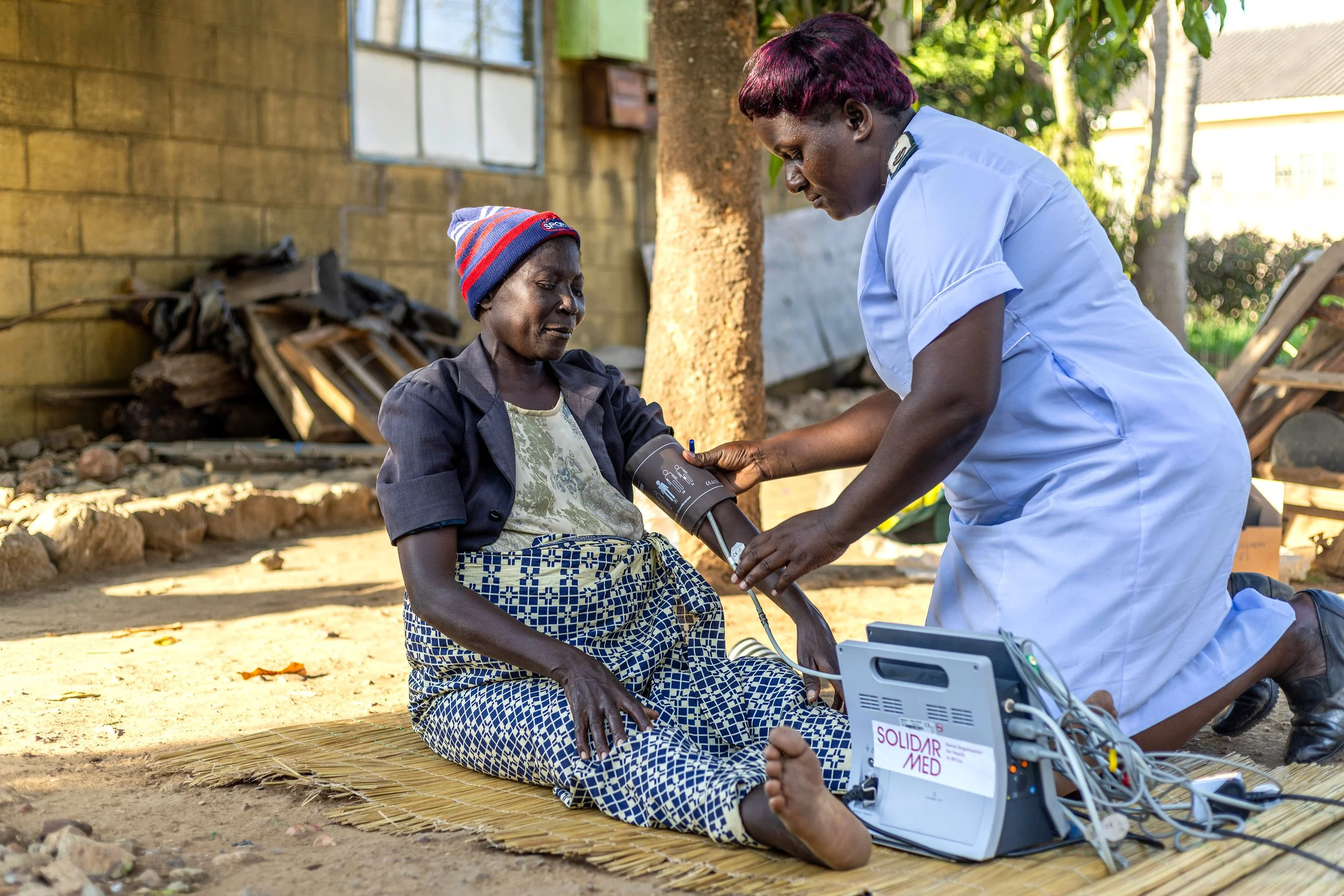
Euna Museva, a nurse with the SolidarMed-run PEN-Plus clinic in Masvingo, Zimbabwe, conducts a blood-pressure checkup on 46-year-old Agnes Mangenge during a home visit. Before PEN-Plus, the pills Mangenge was prescribed for her congestive heart failure and chronic liver failure were too expensive. If she bought them, Mangenge said, “My husband and I would fail to sustain the family.” (Photo: ©Tafadzwa Ufumeli/World Health Organization)
With less than a month until heads of state and health leaders from across sub-Saharan Africa convene at the Third International Conference on PEN-Plus in Africa to discuss strategies for improving care for people living with severe, chronic noncommunicable diseases, a Lancet Primary Care editorial provides a powerful testament to the impact of PEN-Plus.
Published earlier this year, the editorial, “PEN-Plus: A First Step to Better Care,” lays out the successes and stakes of PEN-Plus, and calls for increased government action to ensure health for all. The editorial’s online edition includes hyperlinks to the NCDI Poverty Network’s January article on the launch of Ethiopia’s National Operational Plan for PEN-Plus; the Network’s fifth-year anniversary article in December 2025; the online flipbook of the 2025 edition of the PEN-Plus magazine, which the WHO Regional Office for Africa and the Network produced in collaboration; and the Network’s PEN-Plus Partnership Strategic Plan (2025–2028).
“In rural communities where people travel long distances to access care in tertiary hospitals, PEN-Plus ensures local decentralized care for less common NCDs that can have major long-term health impacts, including type 1 diabetes, sickle cell disease, and rheumatic and congenital heart diseases,” The Lancet states in the editorial. “The NCDI Poverty Network aims to further expand PEN-Plus…with a focus on health equity, quality of care, and solid financing plans. These efforts will be essential to achieve (the WHO’s) Sustainable Development Goal 3.4, to reduce premature mortality due to NCDs by a third by 2030.”