Celebrating the Network’s First Five Years
The NCDI Poverty Network launched in December 2020 to expand access to lifesaving treatments for children, adolescents, and adults living with severe, chronic noncommunicable diseases in extreme poverty. In its first five years, the Network has helped transform its best-known solution—PEN-Plus, an integrated health delivery model—from an idea into a vibrant international movement, with 29 partner countries in sub-Saharan Africa, southern Asia, and the Caribbean.
At the second International Conference on PEN-Plus in Africa, held this past summer in Abuja, Nigeria, representatives from countries across the continent presented on progress in ensuring lifesaving care to people living with the burden double of severe, chronic noncommunicable diseases and extreme poverty through the PEN-Plus model of integrated care.
In the final day of the conference, two artistic expressions complemented the scientific presentations: a PEN-Plus-inspired song with lyrics aimed at helping patients in peer support groups in Mozambique, and a spoken word piece, in which the poet called PEN-Plus “a movement born of necessity, clothed in dignity.”
By that third day, the unofficial theme of the conference had indeed emerged: PEN-Plus had become a movement, with more than one participant proclaiming, “PEN-Plus has taken on a life of its own!”
The Growing Momentum
The Abuja conference was just one milestone the NCDI Poverty Network is marking this month, on the fifth anniversary of the Network’s founding.
In the past year alone, for example, the Network played a key role in supporting the World Health Organization Regional Office for Africa in organizing the Abuja conference, during which countries and supporters reaffirmed their commitment to accelerating PEN-Plus implementation.
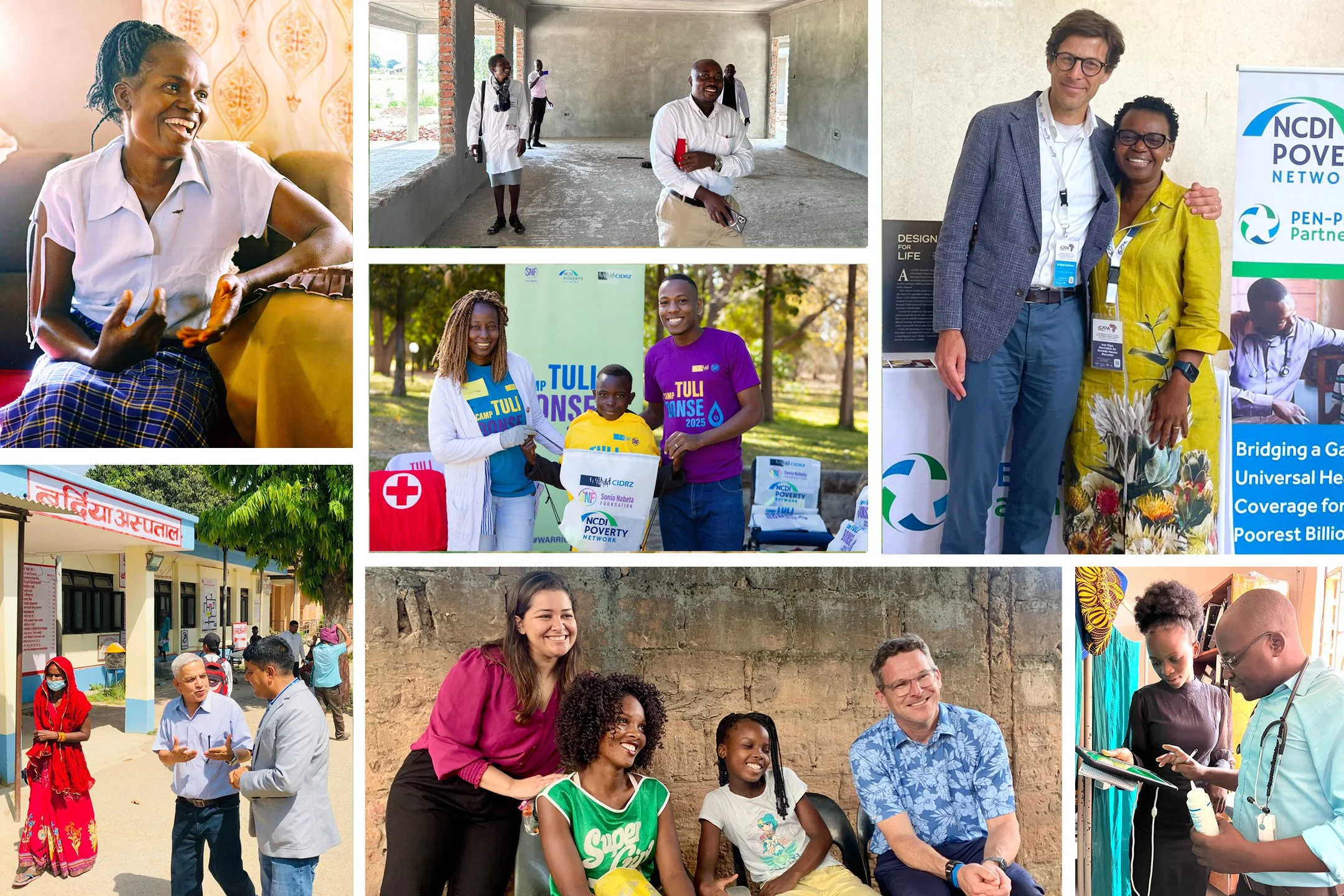
The following month, the Network partnered with the Sonia Nabeta Foundation and the Centre for Infectious Disease Research in Zambia, or CIDRZ, to host a PEN-Plus camp in Zambia. By integrating support for young people living with type 1 diabetes or sickle cell disease, the camp demonstrated the power of peer connection.
The national commitments expressed at the Abuja conference continued momentum into September, during the opening plenary of the United Nations High-Level Meeting on NCDs and Mental Health in New York City. There health ministers and other delegates from eight African countries used valuable time from their allotted three minutes to highlight PEN-Plus.
The Network’s expanded reach in just the past year included six new partner countries—Angola, Eswatini, Lesotho, Niger, the Republic of Congo, and Somaliland. Three others—Kenya, Zambia, and Zimbabwe—launched their National Operating Plan, and new clinics opened in several countries.
Dr. Gene Bukhman, one of the Network’s two co-chairs, noted that momentum continued to build despite global shifts in the health landscape.
“In a year of major changes in health funding and infrastructure,” he said, “the Network advanced with resilience and purpose. Together, we’re poised for impact at scale.”
Setting the Stage
The Network’s official launch took place in December 2020, in a Zoom call at the height of the COVID pandemic. That seemingly modest beginning cloaked the reality that the Network’s underpinnings had evolved over a much longer timespan.
In 2016, the Lancet Commission on Reframing Noncommunicable Diseases and Injuries for the Poorest Billion formed to address one of the most glaring inequities in global health: the crushing burden of noncommunicable diseases and injuries on the world’s poorest populations. “From the beginning, the commission was not just an academic project,” said Dr. Bukhman, “but a struggle to understand and change one of the great injustices in our world.”
Led by Dr. Bukhman, a cardiologist at Brigham and Women’s Hospital in Boston, Massachusetts, and Dr. Ana Mocumbi, a cardiologist at Universidade Eduardo Mondlane in Maputo, Mozambique, the international commission developed key findings, messages, and recommendations that they presented in a report in September 2020. Three months later, the two cardiologists launched the Network.
“With the Network, we wanted to create a home for a set of urgent issues that were falling through the cracks of the major global health movements,” said Dr. Bukhman, who also serves as executive director of the Network’s U.S.-based co-secretariat, the Center for Integration Science in Global Health Equity at Brigham and Women’s Hospital. “The emerging field of integration science has become the guide for us: integrated delivery models to the power integrated social movements. Today, through the Network, hundreds of leaders across 29 countries in sub-Saharan Africa, southern Asia, and the Caribbean are working every day for progress on global health equity by linking effective models of care—such as PEN-Plus—with inclusive social movements.”
Looking to the Next Five Years
To date, those 29 countries have initiated PEN-Plus, with over half of them implementing the model across a total of more than a hundred clinics. Together, those clinics have already provided lifesaving care to more than 30,000 children, adolescents, and adults.
“We’re proud to celebrate five years of the NCDI Poverty Network,” said Dr. Mocumbi, who serves as the Network’s other co-chair and leads the Network’s co-secretariat in Maputo. “In addition to our focus on finding solutions for people doubly burdened by severe disease and extreme poverty, we’ve been able to grow PEN-Plus from an idea into a movement. Our fifth anniversary provides us with an opportunity to recognize the critical role our partnerships have played in shaping this progress. Our history shows what collaboration can achieve.”