An Ethiopian Teenager’s Return to Health and Learning
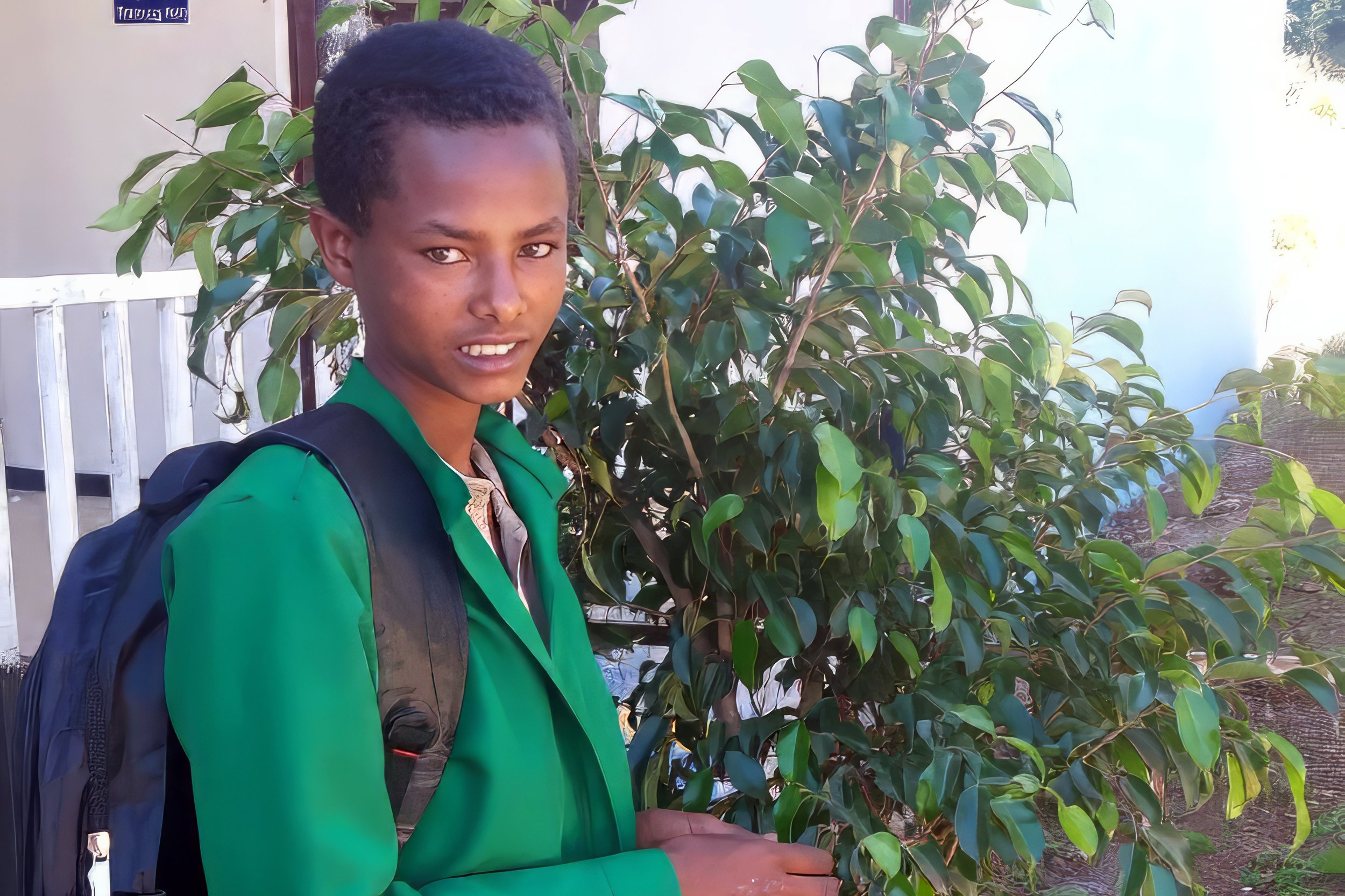
For several years, without funds for transportation or food, Yismaw Nigussie, a 15-year-old living in rural northern Ethiopia, would risk his health even getting to the clinic that provided treatment for his type 1 diabetes. Then a routine assessment changed the trajectory of his life. (Photo: Courtesy of the Mathiwos Wondu Foundation)
The morning sun would barely be breaking through the trees when Yismaw Nigussie would begin his journey. At just 15 years old, he faced a trek that would challenge most adults: a grueling three-hour walk through the rugged terrain of South Gondar Zone in northern Ethiopia, followed by a 60-kilometer ride on public transportation, to reach lifesaving medical care.
For several years, this had been the reality for Yismaw, who was diagnosed with type 1 diabetes at age 12. Where most teenagers his age worry about homework and friendships, Yismaw had been navigating life-or-death decisions about insulin, blood sugar levels, and the dangers of traveling long distances on an empty stomach.
The challenges didn’t end when Yismaw would return to his home in a remote village tucked away in Ethiopia’s Amhara Region. His mother, battling her own serious illness, remained bedridden and unable to provide the support her son desperately needed. His stepfather insisted he contribute financially to the household, even at the cost of his education and possibly his health.
Yismaw was forced to quit school after fourth grade. To help make ends meet, he began collecting firewood from nearby forests, selling bundles to earn enough money for his family’s survival. Each expedition into the forest became a dangerous gamble with his glucose levels, undertaken without the luxury of a home glucometer to monitor his condition.
The irony was cruel: The work meant to sustain his family was jeopardizing his own health.
Fortunately, everything changed within a few months of a routine assessment visit to the PEN-Plus program at Addis Zemen Primary Hospital. Representatives from the Mathiwos Wondu Foundation, which administers the PEN-Plus program with NCDI Poverty Network support, noticed Yismaw sitting alone, with ragged and stained clothes covering his malnourished frame. He seemed to embody the dangerous intersection of severe, chronic illness and poverty and the PEN-Plus program was designed to address.
The team’s recommendation was swift and comprehensive. Yismaw needed more than medical care; he needed transportation support, educational assistance, and coverage for diagnostic services that his community-based health insurance could not provide. The support meant he could use public transportation in lieu of the three-hour trek through rugged terrain. And funding for food has been critical in helping him recover from malnutrition and reducing the risks associated with taking insulin without adequate food.
When Yismaw learned about the support being offered through PEN-Plus, he seemed suffused with joy as he expressed his gratitude. For the first time in years, someone was investing in his future rather than just his survival.
The impact has been transformative. With proper support systems in place, Yismaw can now manage his diabetes effectively, no longer forced to choose between his health and his family’s financial needs. And he’s back in school, resuming the education he had been forced to abandon.
“No child should have to choose between survival and education, or between supporting their family and protecting their health," said Dr. Natnael Abebe, the NCDI Poverty Network’s regional advisor for East Africa. “Yismaw is not an exception; he is a reflection of thousands of children whose lives can change if we invest in equitable, decentralized care.
“Yismaw’s transformation shows us that with timely, integrated support, even the most fragile situations can be turned into stories of hope. His story challenges us to act, to scale, and to ensure that geography and poverty no longer determine destiny.”