Peer Support a Growing Focus of Noncommunicable Disease Care
For young people with severe, chronic conditions, learning from each other can play a critical role in fostering mental health.
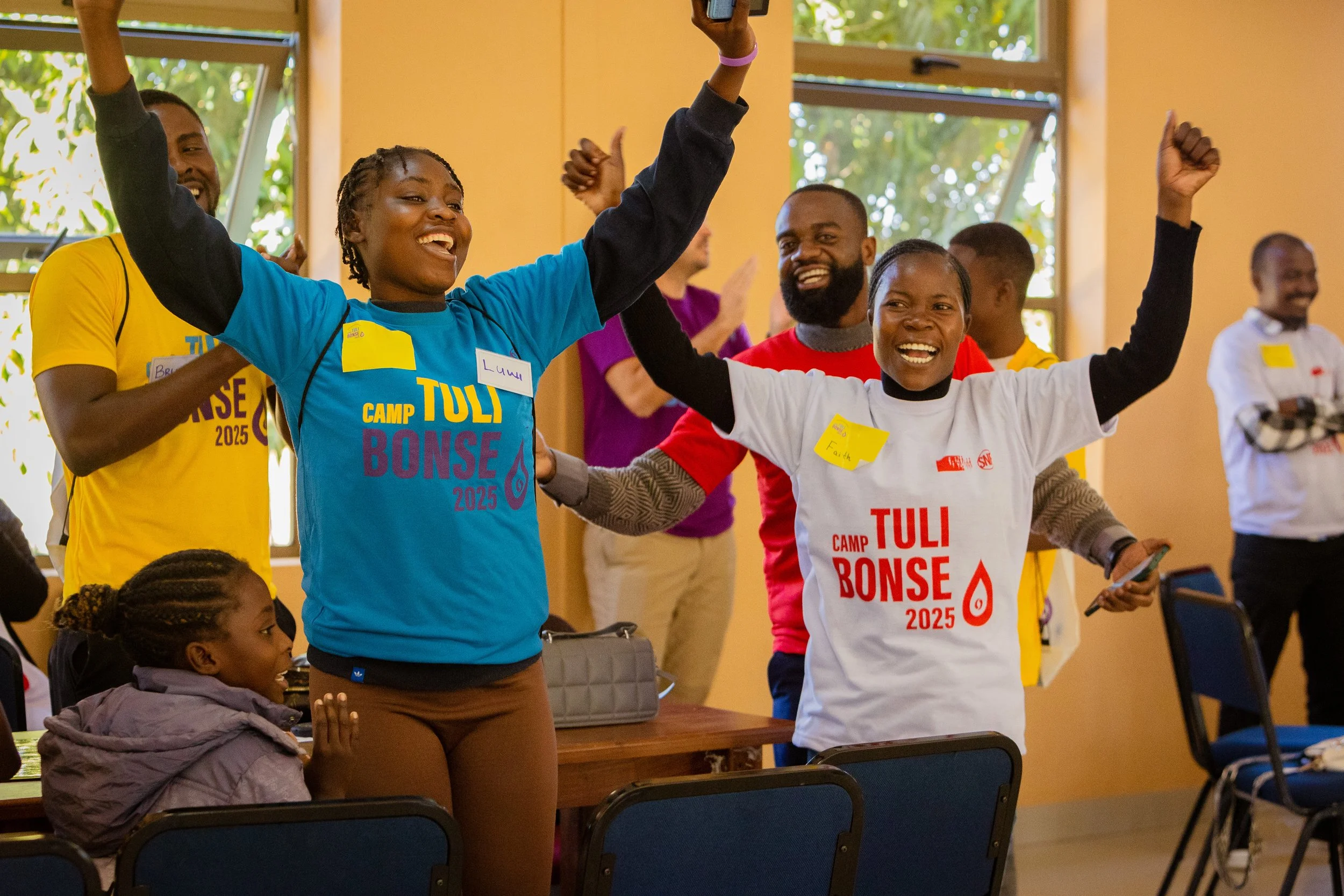
Camp Tuli Bonse—an integrated PEN-Plus camp held near Lusaka, Zambia, in August 2025—was born from the idea that integrated care and support could extend beyond clinical settings, with benefits that transcend those of physical health. The camp brought together nearly 60 young people living with either type 1 diabetes or sickle cell disease for five days of health education, empowerment, and peer support. (Photo by DOD Media Hub)
From Ghana to Zambia to Canada, peer support was a big topic for noncommunicable disease care in 2025—and the focus on mental and social wellbeing that peer support creates will continue growing in 2026.
“We’re in advanced stages of planning for more peer educators,” said Dr. Colin Pfaff, associate director of programs for the Center for Integration Science in Global Health Equity at Brigham and Women’s Hospital. The center is a co-secretariat of the NCDI Poverty Network, which supports care for people living with NCDs across sub-Saharan Africa, South and Southeast Asia, and the Caribbean.
“In each of the countries where we work, we’re preparing an integrated training for peer educators in both type 1 diabetes and sickle cell disease, to develop a cohort of peer educators with both conditions who would then have a formal role within PEN-Plus clinics, to mentor, teach, and support other warriors,” Dr. Pfaff said, using the “warrior” term that many people living with NCDs, especially young people, use to refer to themselves and each other.
PEN-Plus is a model of integrated care that focuses on training and equipping providers to bring specialized care closer to home for people in rural settings who are living with severe, chronic NCDs such as type 1 diabetes, sickle cell disease, and childhood heart disease. The patient-centered model also fosters health education and peer support for patients, who often face stigma and a lack of understanding about their disease in their communities.
Dr. Betty Bankah, a family physician and founder of the Adolescent Care Clinic at Greater Accra Regional Hospital in Ghana, said her clinic includes a casual lounge where young people with NCDs can hang out and talk with each other.
“About 80 percent of my counseling is accomplished by the warriors,” Dr. Bankah said. “What they can do in 20 minutes, talking with each other, would take me three days.”
Dr. Nana Ama Barnes, executive director of Diabetes Youth Care in Ghana, said she has a similar strategy for promoting empowerment and confidence among young people with severe NCDs. Diabetes Youth Care provides resources, education, and support for young people living with type 1 diabetes in Ghana.
“If I talk, it’s just ‘blah blah blah,’” Dr. Barnes said, making “talking” motions with her hands in a universal gesture for loquaciousness. “I just get the kids to talk to each other.”
Dr. Bankah, chair of the Diabetes Youth Care board, works closely with Dr. Barnes. In November, at the International Society for Pediatric and Adolescent Diabetes’ (ISPAD) annual conference, held in Montreal, the two stood together talking about the importance of peer support for young people, who often face significant social challenges related to the lack of community knowledge about their disease.
“It’s tough for them,” Dr. Bankah said. “My phone lines are open 24/7. We talk about how diabetes is not going to stop you.”
Diabetes has not stopped 24-year-old Emmanuella Selasi Hormenoo, secretary-general of Diabetes Youth Care and a member of the NCDI Poverty Network’s Voices for PEN-Plus advocacy team. At the World Health Summit in October, Hormenoo shared stages with global health dignitaries on two panels. She spoke about her childhood in Ghana, where her type 1 diabetes was not diagnosed until after she had fallen into a two-month coma. After four doctors had failed to treat her diabetes, Hormenoo said, a family physician saved her life, shared resources about her disease, and taught her to direct her anger into advocacy, to help other people in similar situations.
That family physician was Dr. Bankah.
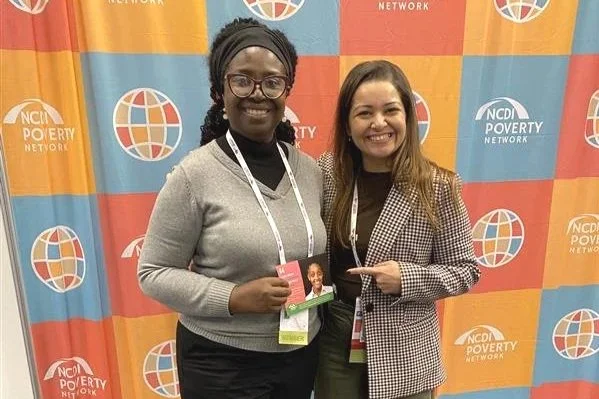
Dr. Betty Bankah (left), a family physician and board chair for Diabetes Youth Care, stands with Dr. Apoorva Gomber, associate director of advocacy for the NCDI Poverty Network, at the annual ISPAD conference in November 2025 in Montreal, Canada. Dr. Bankah is holding a picture of Emmanuella Selasi Hormenoo, an international advocate for people living with type 1 diabetes. Dr. Bankah helped Hormenoo get a correct diagnosis and care for her diabetes when Hormenoo was a child.
Camp Camaraderie
Earlier last year, at Camp Tuli Bonse, an integrated PEN-Plus camp held in August near Lusaka, Zambia, Dr. Pfaff also witnessed the power of peer support and the strength that can come from people uplifting each other.
“What struck me, particularly, was young people sharing stories around the significant stigma that they face,” he said of the camp, which brought together nearly 60 young people living with either type 1 diabetes or sickle cell disease. “They told stories of not being able to attend school, of harmful words being spoken in the community, of misbeliefs around not being able to become pregnant or raise children, and of being excluded from job opportunities.
“We knew there was some sort of commonality in those stories, but when you sit in a group and hear those stories from individuals, told with power and emotion—it’s quite moving. There was a sense of solidarity at the camp, allowing people to find strength in one another’s shared stories.”
The NCDI Poverty Network, the Sonia Nabeta Foundation, and the Center for Infectious Disease Research in Zambia (CIDRZ) partnered to host Camp Tuli Bonse, the first disease-integrated camp for children and adolescents receiving care at PEN-Plus clinics in Zambia.
Camp Tuli Bonse—which translates in Nyanja to “we are together”—was born from the idea that integrated care and support could extend beyond clinical settings, with benefits that transcend those of physical health. The camp brought together nearly 60 young people living with either type 1 diabetes or sickle cell disease, for five days of health education, empowerment, and peer support.
The Sonia Nabeta Foundation regularly hosts wellness camps and warrior education workshops in several African countries. The events are rooted in the philosophy of integrating the mind, body and spirit into type one diabetes care and management regimes.
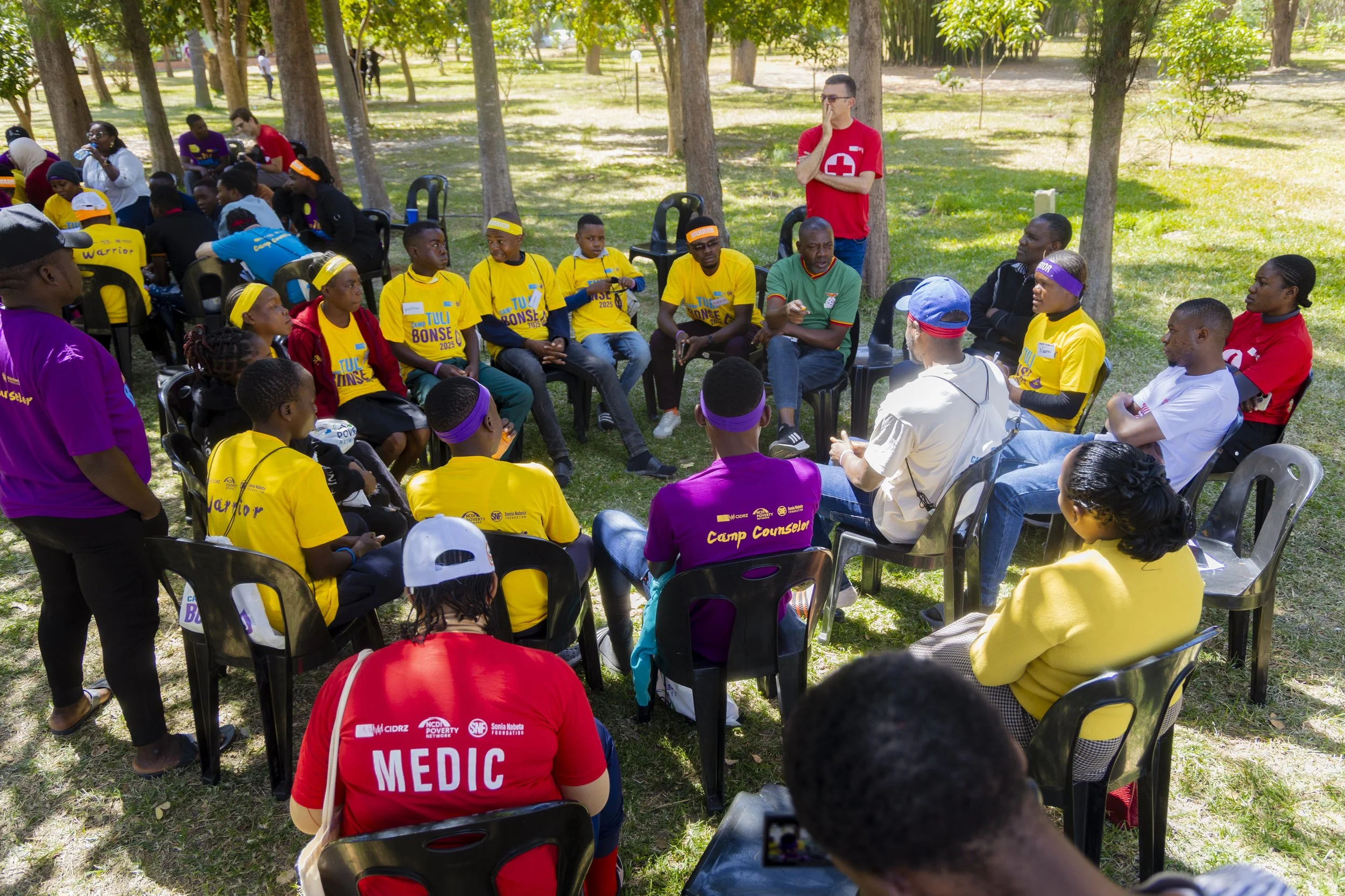
Young people living with either type 1 diabetes or sickle cell disease share their experiences during a session about advocacy and empowerment at Camp Tuli Bonse in August 2025 near Lusaka, Zambia. Dr. Colin Pfaff, associate director of programs for both the NCDI Poverty Network at the Center for Integration Science in Global Health Equity at Brigham and Women’s Hospital, stands at center in a red medic shirt. (Photo by DOD Media Hub)
Backed by Research
As the NCDI Poverty Network expands peer support programs in PEN-Plus clinics and camps this year, recently published research will bolster the work. A recent study facilitated by the Center for Integration Science in Global Health Equity, a co-secretariat of the NCDI Poverty Network, details positive impacts from patient-centered care that now are expanding into training programs.
Gina Ferrari, a type 1 diabetes integration advisor for the Center for Integration Science, said a one-year study of self-management education for people living with type 1 diabetes in rural Liberia—published in December in PLOS Global Public Health—convened a Patient Advisory Board, which spurred the development of a peer support group. The results have informed training sessions in both Zimbabwe and Kenya.
Dr. Pfaff said expanding peer support programs will continue to benefit PEN-Plus programs.
“I’m a real champion of the power of peers learning from one another,” Dr. Pfaff said. “We’ve seen beautiful examples of young people who are unafraid to speak boldly about their condition, to be advocates, to be champions. They are living successful lives and are inspiring examples for others. Every time we host a PEN-Plus camp, we hear children saying things like, ‘I thought I was alone. I was the only one I knew with this condition, so I felt really isolated.’
“I believe that peer support is one of the most powerful tools the Network can provide.”